
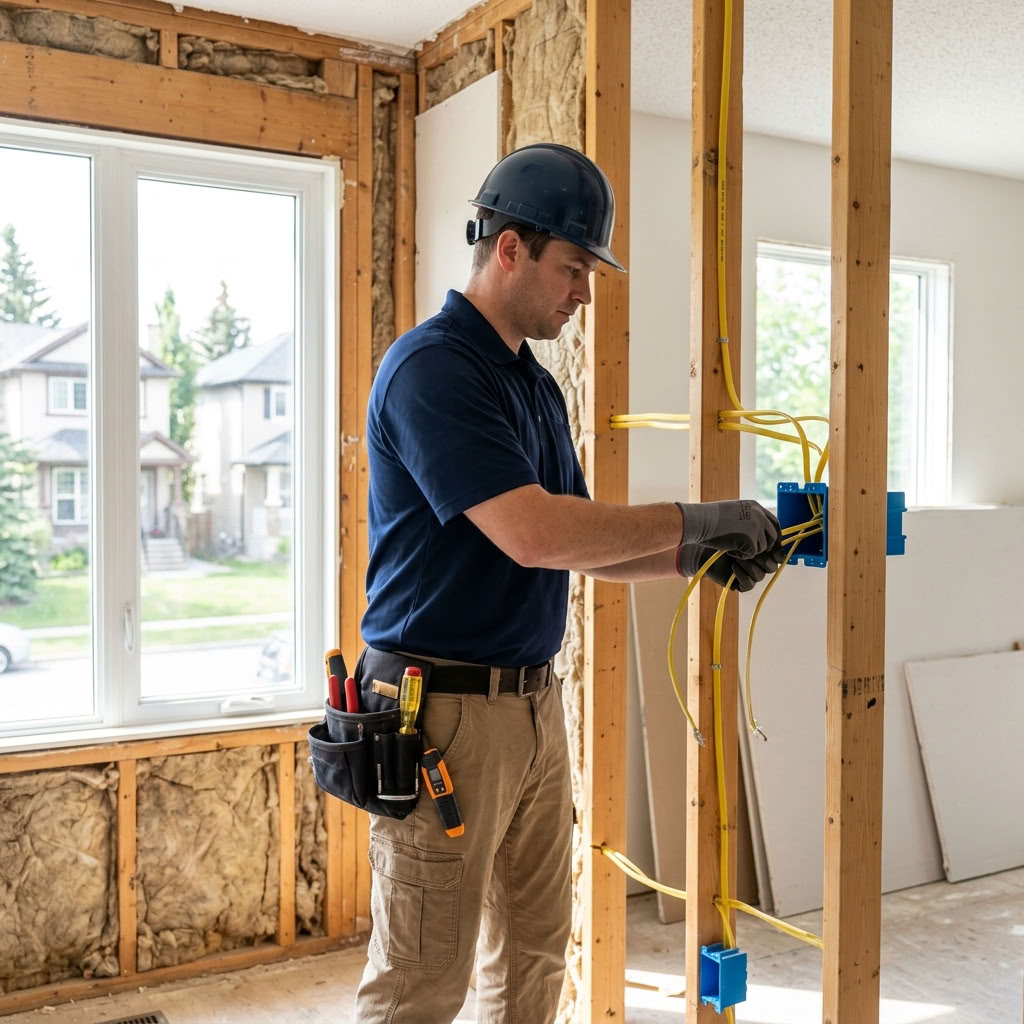
When you’re planning a home addition or renovation in Calgary, electrical wiring is one of the first things you need to think about. It’s not just about adding outlets or light fixtures. It’s about making sure your home is safe, up to code, and ready for everything you’re adding to it. At Electrical Maintenance Services, our licensed and insured technicians have over 15 years of experience helping Calgary homeowners get their electrical work done right the first time.
This guide walks you through everything involved in renovation electrical work, from panel capacity checks to rough-in inspections, so you can plan with confidence.
Why Electrical Wiring Is a Core Part of Any Home Renovation
Electrical wiring isn’t something you can treat as an afterthought during a renovation. The moment walls open up, you’re looking at what’s actually inside them, and in many Calgary homes, especially those built before the 1990s, what you find isn’t always pretty. Older wiring like aluminum branch circuit wiring or knob-and-tube systems can create serious safety risks and often can’t legally be extended or tied into under current Alberta electrical code.
Beyond the safety concerns, most renovations physically require new or updated wiring. Adding a room means adding circuits. Expanding a kitchen means meeting modern load requirements for appliances. Finishing a basement means running new wiring from scratch. None of this is optional when you’re doing the work properly.
Calgary’s building code also plays a role here. When a permit is pulled for a renovation, the work must meet the Canadian Electrical Code as adopted by Alberta, and any existing wiring in the affected area may need to be brought up to standard. This is something many homeowners don’t anticipate until they’re already mid-project, which is why involving an electrician early matters so much.
What Electrical Work Is Typically Required During a Home Addition?
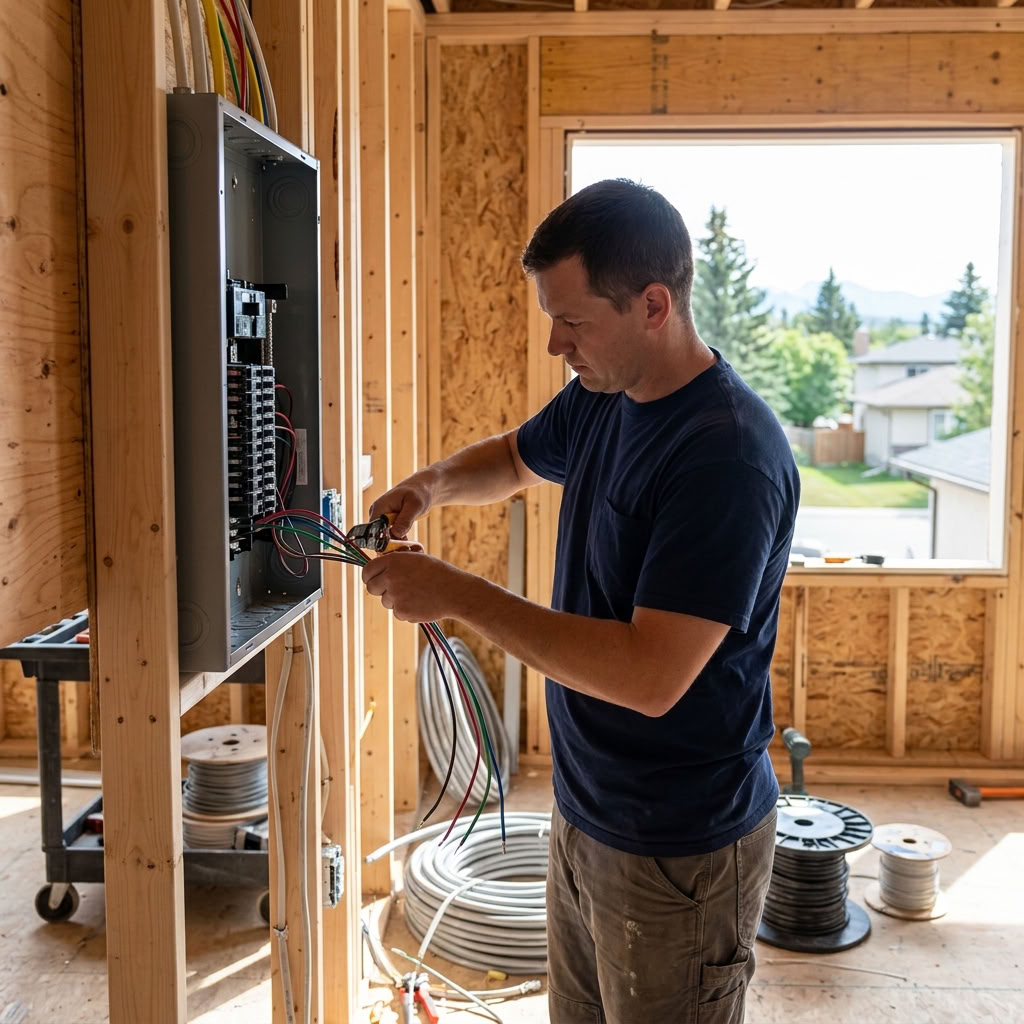
A home addition is essentially building new livable space, and that space needs its own electrical infrastructure. The exact scope depends on what the addition is for, whether it’s a bedroom, a home office, a sunroom, or a full secondary suite. That said, most home additions in Calgary involve a similar set of core electrical tasks.
New circuits need to be run from the main panel to the addition. Outlet placement must meet code requirements, which in Alberta means receptacles spaced no more than 1.8 metres apart along wall space. Lighting rough-in needs to happen before the drywall goes up, and smoke detectors must be hardwired and interconnected with the rest of the home. If the addition includes a bathroom or kitchen area, GFCI-protected outlets are also required near water sources.
One of the most overlooked steps is checking whether the existing electrical panel can actually support the added load. This is something your electrician will assess before any new circuits are pulled.
How Do You Know If Your Panel Can Handle a Home Addition?
The short answer is: you need a licensed electrician to assess it. Panel capacity is measured in amperes, and most Calgary homes have either a 100-amp or 200-amp service. A 100-amp panel may have been adequate when the home was built, but modern homes with electric ranges, EV chargers, air conditioning, and multiple large appliances push that limit quickly.
When an electrician evaluates your panel for a home addition, they perform a load calculation. This calculation adds up all the existing electrical loads in your home and compares the total to your panel’s rated capacity. If the addition pushes that number too close to the limit, or past it, a panel upgrade is needed before any new circuits are added.
Panel upgrades are common during Calgary renovations, and bundling that work with your addition often saves money compared to doing it as a separate project later. Upgrading from 100 to 200 amps also future-proofs your home for things like EV chargers or additional HVAC equipment down the road.
Do You Need a Permit for Electrical Work in a Calgary Renovation?
Yes, almost all electrical work done during a renovation in Calgary requires a permit. Under Alberta’s Safety Codes Act, electrical work must be permitted and inspected by an accredited safety codes officer. The City of Calgary administers this process through its permit and development office.
Only a licensed master electrician can pull electrical permits in Alberta. This is one of the key reasons why hiring a licensed electrician for renovation work isn’t just a recommendation, it’s a legal requirement. If work is done without a permit, you could face fines, be required to tear out completed work for inspection, or run into serious issues when you try to sell your home.
The permit process also protects you as a homeowner. It ensures that a qualified inspector reviews the work at both the rough-in and final stages, giving you an independent check that everything was done safely and correctly.
Common Electrical Upgrades Done Alongside Renovations
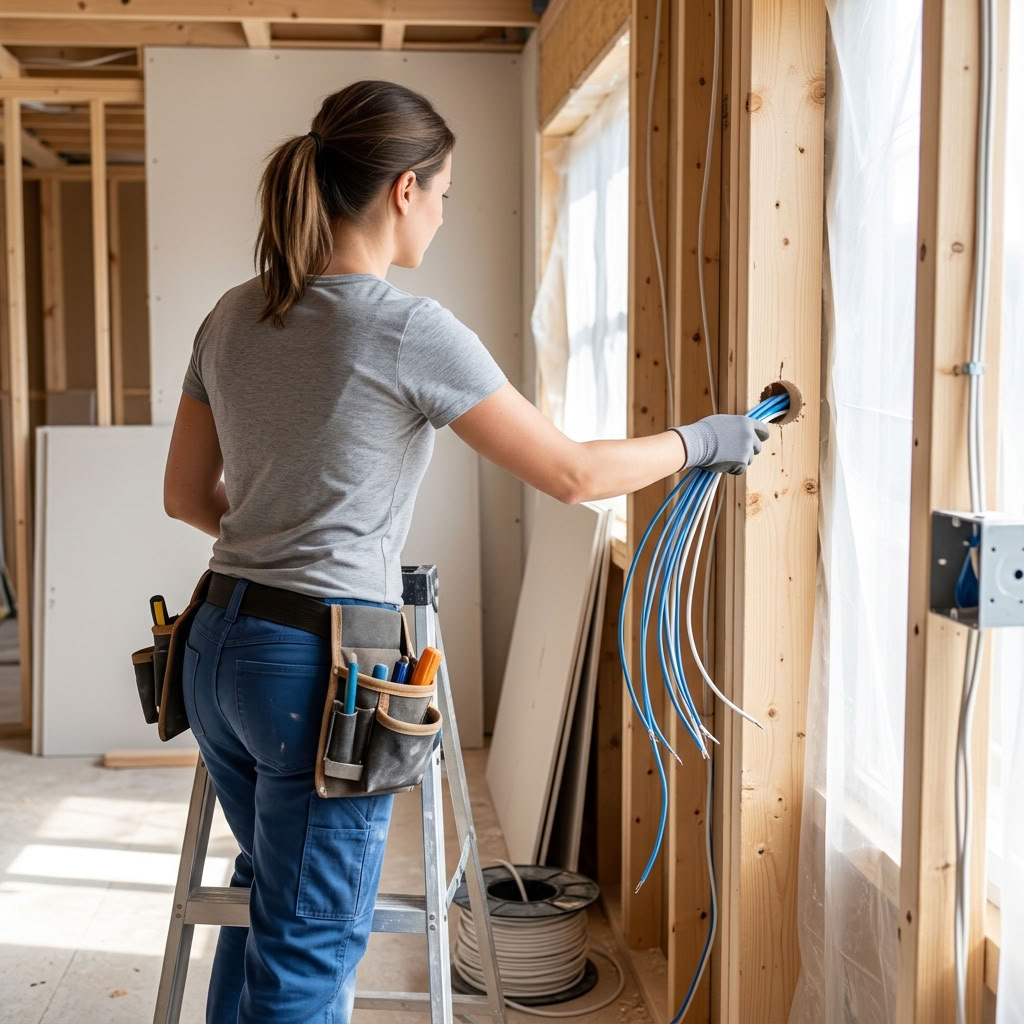
Renovations are one of the best times to handle electrical upgrades that improve your home’s safety and functionality. Since walls are already open and your electrician is already on-site, the incremental cost of adding upgrades is much lower than scheduling separate work later.
Some of the most common upgrades Calgary homeowners combine with their renovation include:
- Panel upgrades from 100-amp to 200-amp service, particularly in older homes
- GFCI outlet installation in kitchens, bathrooms, garages, and outdoor areas where moisture is a concern
- AFCI breaker upgrades, which are now required by code in most bedroom circuits and offer protection against arc faults that can start fires
- Dedicated circuits for large appliances like refrigerators, dishwashers, microwaves, and electric ranges
- Improved lighting layouts, including pot lights, under-cabinet lighting, and switched outlet configurations
- EV charger rough-in, even if you don’t have an electric vehicle yet, adding the infrastructure now is far cheaper than retrofitting later
Bundling these upgrades with your renovation is simply smart planning. You avoid the disruption of reopening walls and the cost of bringing an electrician back for a second mobilization.
How Much Does Electrical Wiring for a Renovation Cost in Calgary?
Electrical wiring costs for a renovation in Calgary vary depending on the size of the project, the condition of your existing panel, and the scope of work involved. That said, having a realistic range helps you plan your budget before you start.
For a typical basement development, electrical work generally falls between $3,500 and $7,500, depending on how many rooms are being created, whether a bathroom is included, and how far the wiring needs to run from the panel. Kitchen renovations tend to run between $1,500 and $4,000 for electrical work alone, particularly when dedicated circuits for new appliances are part of the plan. A full home addition can range from $5,000 to $15,000 or more, especially if a panel upgrade is also required.
These are working estimates based on typical Calgary projects. Your actual cost will depend on specifics that your electrician can only assess after reviewing your home’s current setup. At Electrical Maintenance Services, we provide transparent pricing so you know exactly what you’re getting into before work begins.
What Factors Affect the Cost of Renovation Electrical Work?
Several variables influence the final cost of electrical work in a renovation. Understanding them helps you have a more productive conversation with your electrician during the quoting stage.
The size of the space being renovated is one of the biggest factors. More square footage means more wiring, more outlets, and more circuits. The number of circuits required also affects cost directly, since each circuit involves wire, a breaker, and labour time to run and connect it.
Panel upgrade needs can add significantly to the budget. If your current panel is at or near capacity, or if it’s an older model that needs to be replaced entirely, that work needs to happen before new circuits are added. Permit fees are a real cost too, typically ranging from a few hundred dollars depending on the scope of work, and these are required, not optional.
Finally, accessibility of wiring runs plays a role. In an open basement or a new framed addition, running wire is straightforward. In a finished space where wire needs to be fished through walls or around obstacles, the labour time increases accordingly.
Why You Should Hire a Licensed Electrician for Renovation Wiring
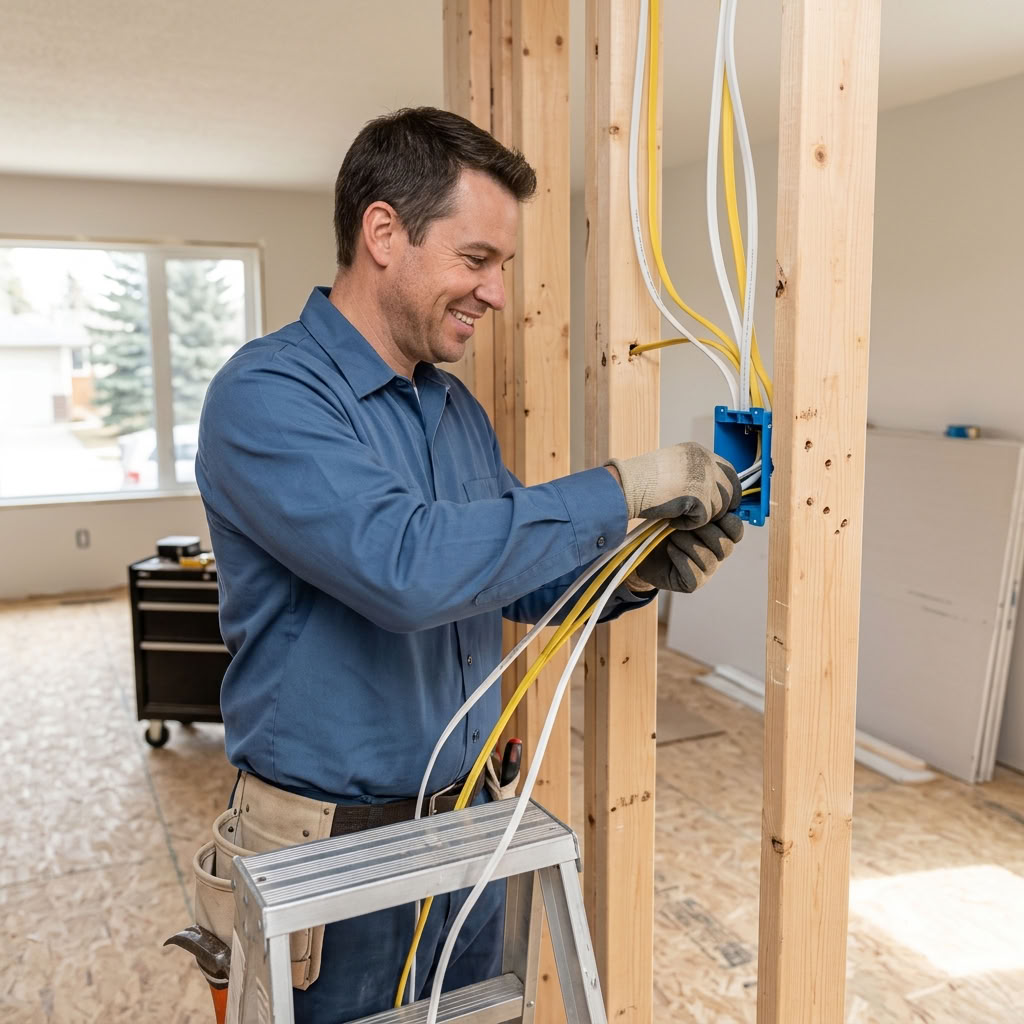
Hiring a licensed electrician for your renovation isn’t just about following rules. It’s about protecting your home, your family, and your investment. Unlicensed electrical work is one of the most common causes of house fires, and it also creates serious liability and insurance problems that many homeowners don’t discover until something goes wrong.
In Alberta, only licensed electricians can legally perform electrical work that requires a permit. If an unlicensed person does the work and something later goes wrong, whether it’s a fire, a shock injury, or a failed inspection at resale, your home insurance policy may not cover it. Many insurance companies specifically exclude damage caused by unpermitted or unlicensed work.
The team at Electrical Maintenance Services is fully licensed and insured, with over 15 years of hands-on experience in Calgary residential renovations. That experience matters in practical terms: our technicians know how to work efficiently within your project timeline, identify problems before they become expensive, and make sure every circuit, outlet, and connection meets Alberta’s current electrical code. You’re not just paying for the wire and labour. You’re paying for the expertise that keeps your renovation safe and compliant.
What to Expect During the Electrical Rough-In and Final Inspection Phase
Renovation electrical work happens in two distinct stages, and understanding both helps you coordinate your renovation schedule more effectively.
The rough-in phase is the first stage. This happens after framing is complete but before insulation and drywall are installed. During rough-in, your electrician installs all the wiring, boxes, and conduit that will eventually be hidden inside the walls and ceiling. At this stage, nothing is connected to power yet. The wires are simply run to their destinations and left in place for the inspector to review. The rough-in inspection verifies that wire sizes are correct, boxes are properly placed, and the layout meets code before the walls are closed.
The final wiring phase happens after drywall is installed and finished. At this point, your electrician comes back to install devices, connect outlets and switches, hang fixtures, and make all the final connections at the panel. Once that work is complete, a final inspection is conducted to confirm everything is connected properly and functioning safely.
Both inspections are required as part of the permit process, and work cannot legally proceed to the next stage until each inspection passes.
How Long Does Electrical Work Take for a Home Addition in Calgary?
Timelines vary based on the size and complexity of the project, but here are realistic ranges for common renovation types in Calgary.
A small room addition with a few outlets, a couple of circuits, and basic lighting typically takes one to two days for rough-in, with another half-day to a full day for final wiring once drywall is done.
A full basement development with multiple rooms, a bathroom, a home office, and a recreational area generally requires two to four days for rough-in and another one to two days for final wiring. If a panel upgrade is also needed, add another half to full day for that work.
A kitchen renovation is often the most intensive electrical work per square foot, given the number of dedicated circuits required. Expect one to two days for rough-in and a similar amount of time for final connections and device installation.
These timelines assume permits are already in place and that inspections are scheduled in advance. Your electrician can give you a more precise timeline once the scope of work is confirmed.
Tips for Planning Electrical Wiring in Your Renovation From the Start
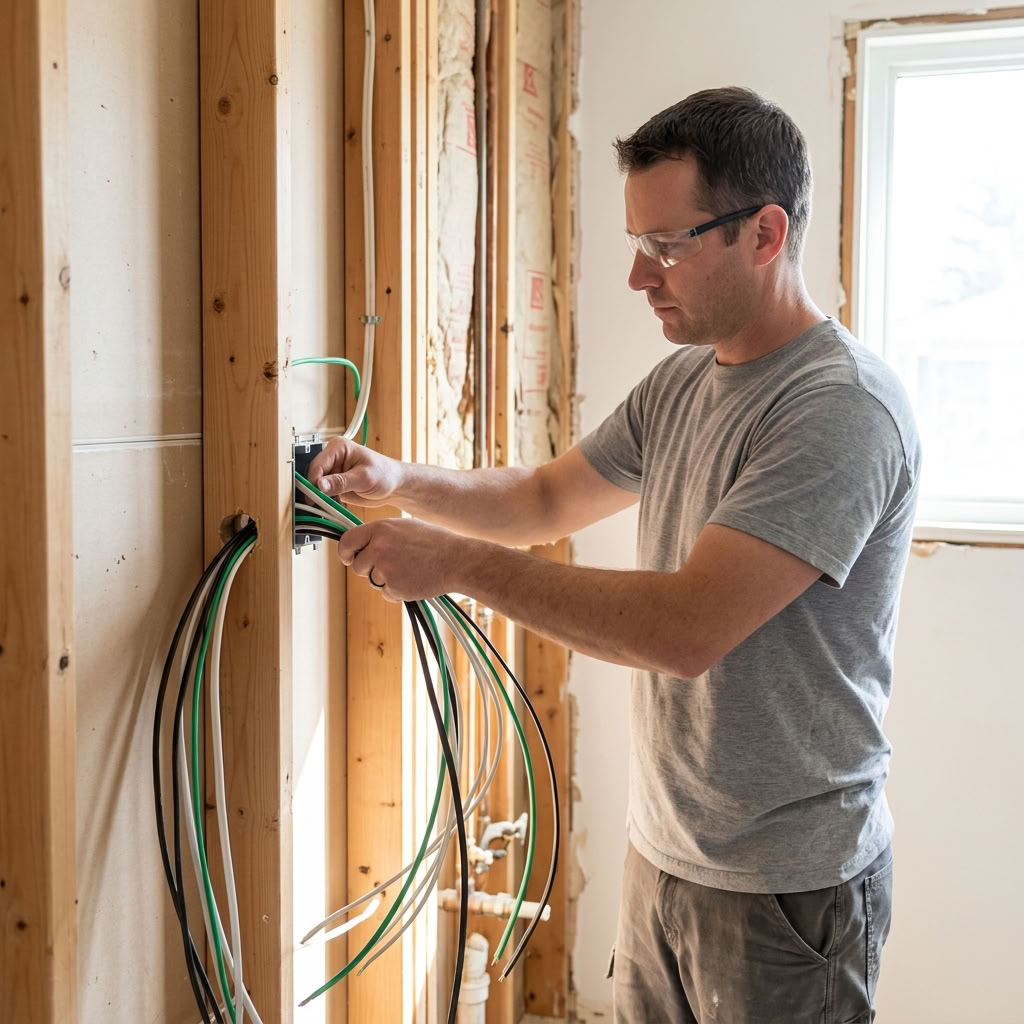
The most costly electrical problems in renovations come from one thing: getting the electrician involved too late. When electrical planning happens after the design is locked in, or worse, after framing has started, you end up with compromises, change orders, and sometimes rework.
Bring your electrician in during the design phase, before you finalize your floor plan. They can advise on where to place the panel in relation to the addition, how to route circuits efficiently, and what load considerations should influence your design decisions. This early involvement also gives you time to apply for permits before your general contractor needs to start framing.
Think long-term when planning your electrical layout. If there’s any chance you’ll own an electric vehicle in the next five to ten years, rough in a dedicated 240-volt circuit for an EV charger now. The cost to add conduit and a circuit during an open renovation is minimal compared to what it costs to retrofit one later. The same logic applies to smart home wiring. Conduit for low-voltage cabling, pre-wired locations for home automation panels, and structured wiring for audio and video are all far easier to add when walls are open.
Avoid the temptation to reduce electrical scope to cut initial costs. Skipping dedicated circuits, undersizing your panel upgrade, or deferring AFCI protection might save money today, but each of those decisions tends to create a more expensive problem later. A well-planned electrical system designed for your renovation, and for the next 20 years of living in your home, is always the better investment.
Frequently Asked Questions
Do I need an electrician for a home renovation in Calgary?
Yes. In Calgary and across Alberta, any electrical work that involves new wiring, new circuits, or changes to your electrical panel requires a licensed electrician and a permit under the Safety Codes Act. This applies to most renovation projects, including basement developments, kitchen renovations, and home additions. Doing this work without a licensed electrician is illegal and puts your home insurance at risk.
Can my existing electrical panel handle a home addition?
It depends on your current panel capacity and how much electrical load the addition will add. Many older Calgary homes with 100-amp service don’t have enough capacity for a significant addition, especially if the home already has modern appliances, air conditioning, or electric heating. A licensed electrician will perform a load calculation to determine whether an upgrade is needed before any new circuits are added.
What is the difference between electrical rough-in and final wiring?
Rough-in is the first phase of electrical work, done after framing but before drywall. During rough-in, your electrician runs all the wiring inside the walls, installs electrical boxes, and prepares everything for inspection. Final wiring is the second phase, completed after drywall is installed. This is when devices, outlets, switches, and fixtures are connected and the panel is energized. Both phases are inspected separately as part of the permit process.
How much does it cost to wire a new room addition in Calgary?
Wiring a new room addition in Calgary typically costs between $2,000 and $6,000 for straightforward projects, though this can increase significantly if a panel upgrade is required or if the addition is large and involves multiple circuits. Costs also vary based on permit fees, material prices, and the accessibility of wiring runs. Getting a detailed quote from a licensed electrician is the most reliable way to budget accurately.
Is a permit required for electrical work during a renovation in Calgary?
Yes. The City of Calgary requires electrical permits for any work involving new circuits, panel changes, or alterations to existing wiring. These permits are issued through Alberta’s Safety Codes process and can only be pulled by a licensed master electrician. Work done without a permit can result in fines, required teardowns, and complications when selling your home.
How long does electrical wiring take for a typical basement renovation?
A full basement development in Calgary typically requires two to four days for rough-in wiring and one to two days for final wiring, depending on how many rooms, circuits, and features are included. If a panel upgrade is also part of the project, that adds an additional half-day to full day. Scheduling inspections between phases also affects the overall timeline, so it’s best to coordinate with your electrician and general contractor from the start.
Can I add outlets and lighting to a renovation without upgrading my panel?
In some cases, yes. If your existing panel has available breaker slots and sufficient remaining capacity based on a load calculation, adding outlets and lighting circuits may not require an upgrade. However, if your panel is already near its capacity, if it’s an older or undersized model, or if the renovation adds significant new loads like kitchen appliances or electric heating, an upgrade will likely be necessary. Your electrician will assess this as part of the initial project review.
Have questions about your upcoming renovation or want to share your experience with electrical work in Calgary? Leave a comment below or reach out to the team at Electrical Maintenance Services for a transparent, no-obligation quote.