
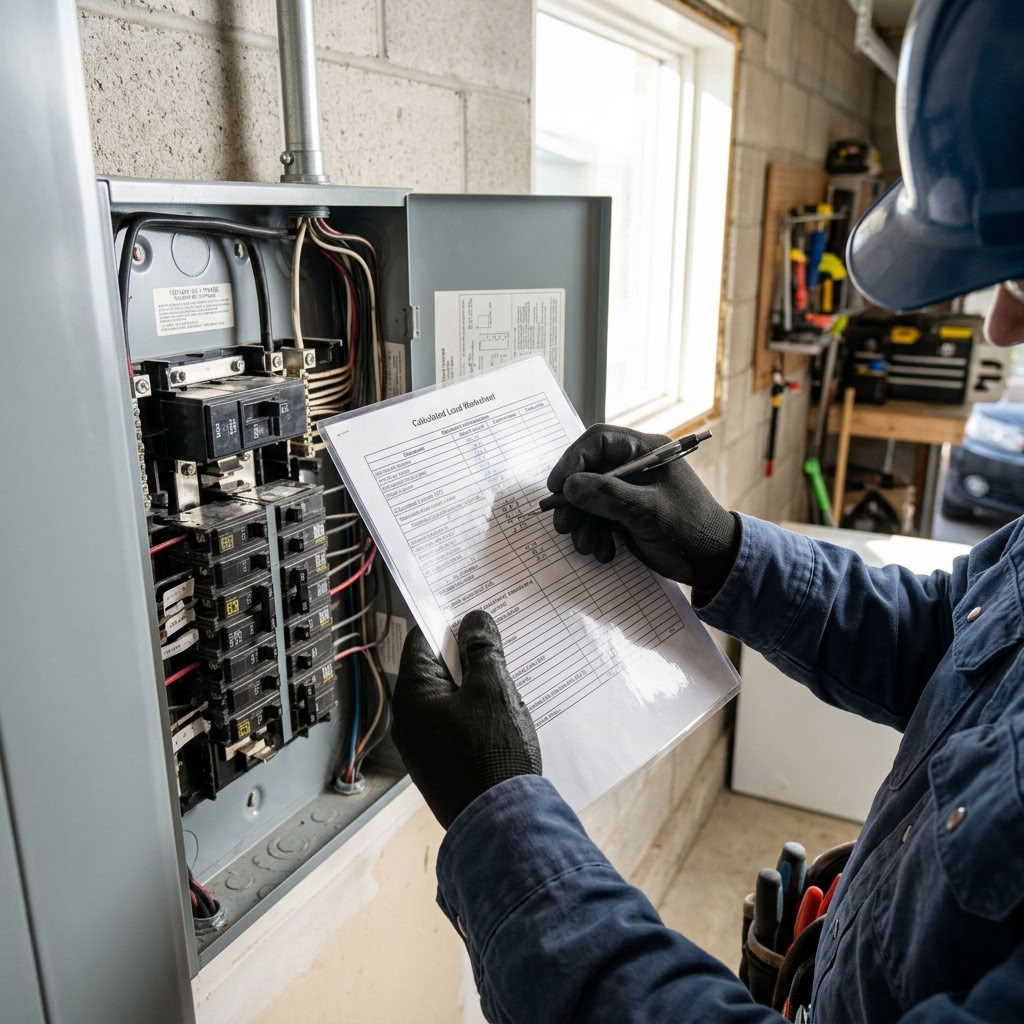
An electrical load calculation is the process of figuring out how much electrical power a building’s wiring, circuits, and panel must handle at any given time. It tells you whether your current electrical system has enough capacity for your needs, or whether it is running dangerously close to its limits. For Calgary homeowners and business owners alike, this calculation is one of the most practical steps you can take before starting any electrical project.
What Is an Electrical Load Calculation?
An electrical load calculation measures the total amount of electricity that all the devices, appliances, and systems in a building demand from the electrical panel. It accounts for everything drawing power, from your HVAC system to your kitchen appliances, and adds it all up to see whether your panel can handle the combined demand safely.
This is not a rough estimate or a quick visual check. Licensed electricians perform these calculations using the Canadian Electrical Code (CEC), which sets out specific rules for how loads must be measured, factored, and compared against panel capacity. The CEC ensures that every calculation follows a consistent, safety-first standard across all residential and commercial properties in Alberta.
Think of it as a budget review for your electrical system. Before you add anything new, whether that is a new circuit, a major appliance, or an EV charger, a load calculation tells you exactly what your system can and cannot absorb without risk. Skipping this step is a bit like spending without checking your account balance. The numbers catch up with you eventually, often at the worst possible time.
Why Electrical Load Calculations Matter for Your Property

Ignoring load calculations creates real risks that go beyond a tripped breaker. When a system is pushed beyond its capacity, you are looking at overheated wiring, fire hazards, and damage to appliances and equipment. In some cases, insurance companies will void a policy if electrical work was completed without proper assessment and permits, leaving property owners with no financial protection after an incident.
Both residential and commercial properties in Calgary need accurate load assessments before renovations, upgrades, or additions. Alberta’s extreme temperature swings mean HVAC systems work hard year-round, and that constant demand adds pressure to electrical systems that were designed for different usage patterns. A load calculation gives you a clear picture of where things stand today.
Transparent pricing also starts with a proper load assessment. When a licensed electrician knows exactly what your system requires, there is no guesswork involved in scoping the work. That means no surprise costs, no mid-project changes in budget, and no decisions made on incomplete information.
Residential Load Calculations: What Homeowners Should Know
For a home, an electrical load calculation looks at square footage, the number of circuits, HVAC systems, kitchen appliances, lighting, and newer additions like EV chargers or hot tubs. Each of these draws a specific amount of power, and the calculation adds them together while applying demand factors that account for the fact that not everything runs at full power simultaneously.
Older Calgary homes are particularly worth paying attention to. Many were built when electrical demand was a fraction of what it is today, and their panels reflect that. A home that was wired decades ago likely did not account for modern kitchen appliances, electric vehicle charging, or high-efficiency heating systems. If your home is on the older side, a load calculation is a smart first step before any addition or upgrade, because it tells you whether your panel is already at or near its limit.
Commercial Load Calculations: What Calgary Businesses Need
Commercial properties come with more layers of complexity than residential ones. Motor loads, commercial lighting systems, large HVAC units, and industrial equipment all have different characteristics that must be accounted for carefully. Unlike a home where loads are relatively predictable, a commercial building can have equipment that starts with a significant power surge before settling into its running load, and that difference matters in the calculation.
Businesses that are expanding their space, adding new machinery, or upgrading their production processes benefit most from a professional load assessment. Getting this done before the work starts means you can plan electrical upgrades alongside the expansion rather than running into capacity problems after the fact.
How Is an Electrical Load Calculation Performed?

A proper electrical load calculation follows a clear process, and each step matters for the accuracy of the final result.
First, the electrician surveys all existing circuits in the building and identifies every connected load, from fixed appliances to lighting to HVAC. Second, all those loads are totalled up to get a raw number for the electrical demand. Third, the electrician applies demand factors from the Canadian Electrical Code, which account for the realistic likelihood that all loads will not run at full capacity at the same time. Finally, that adjusted total is compared against the capacity of the existing electrical panel to determine whether the system can handle the demand or whether an upgrade is needed.
This work requires a licensed and insured electrician. The calculations are governed by the CEC, and errors have real consequences, both for safety and for code compliance. An unlicensed assessment has no standing with the Alberta Electrical Permits and Inspections process and could create problems if you ever sell the property or make an insurance claim.
Electrical Maintenance Services has over 15 years of experience performing load assessments for residential and commercial properties across Calgary. That depth of experience means the team knows how to spot potential issues before they become problems and how to present findings in plain language that property owners can actually act on.
When Should You Get an Electrical Load Calculation?
There are several situations where getting a load calculation done is not just smart, it is essential.
Planning a home addition or major renovation is one of the most common reasons. Any time you are adding square footage or new rooms, the electrical demand of the building changes. The same applies when you are adding an EV charger, since EV charging can draw a significant and sustained load that older panels may not support. Upgrading to a larger HVAC system, adding a hot tub or pool, or finishing a basement are all situations where the electrical demand of the property shifts meaningfully.
You should also consider a load calculation if you are noticing early warning signs, like breakers that trip regularly without an obvious reason, or lights that dim when large appliances start up. These are signs that the system is already under strain, and a proactive assessment is far less disruptive than waiting for a more serious failure.
For situations where an overload becomes an immediate safety concern, Electrical Maintenance Services offers 24/7 availability. Electrical issues do not keep business hours, and having access to a licensed technician around the clock means you are never left waiting when the stakes are high.
What Happens If Your Electrical System Is Overloaded?
An overloaded electrical system gives you warning signs before it fails. Flickering or dimming lights, outlets or switch plates that feel warm to the touch, a burning smell near the panel or outlets, and breakers that trip repeatedly are all signals that something is wrong. None of these should be ignored, because each one points to a system that is being pushed harder than it was designed for.
In the short term, an overloaded system means inconvenience and the potential for equipment damage. Appliances running on circuits under constant strain wear out faster. In the longer term, the risk shifts toward fire. Overheated wiring inside walls is one of the leading causes of electrical fires, and it can develop gradually over months or years before it becomes visible.
The solution depends on what the load calculation reveals. Sometimes the fix is load balancing, which redistributes the demand across circuits more evenly. In other cases, adding circuits is the right answer. If the panel itself is the limiting factor, a panel upgrade may be required to give the system the capacity it needs.
Can an Electrical Load Calculation Reveal the Need for a Panel Upgrade?

Yes, and it does so clearly. If the total calculated load exceeds what the existing panel is rated to handle, the panel becomes the bottleneck. Running a system in that condition is not just inefficient, it is unsafe, and a panel upgrade becomes a necessary part of any electrical project.
When Electrical Maintenance Services completes a load calculation, the licensed technician walks you through exactly what the numbers mean. If a panel upgrade is needed, you will understand why, what it involves, and what it will cost before any work begins. There are no unexpected revelations partway through a project. The assessment gives you the full picture upfront so you can make informed decisions.
How Much Does an Electrical Load Calculation Cost in Calgary?
The cost of an electrical load calculation in Calgary depends on a few factors: the size of the property, the complexity of the electrical system, and whether the assessment is being done as a standalone service or bundled with other work like a panel upgrade or renovation project. A larger commercial property with complex equipment will naturally take more time to assess than a single-family home.
What does not change is the commitment to transparent, upfront pricing. Electrical Maintenance Services provides clear cost information before work begins, so there are no hidden fees or after-the-fact additions to the bill. The goal is to give you accurate information from the start so you can budget with confidence.
Choosing the Right Electrician for Load Calculations in Calgary
Not every electrician is the right fit for every job. When you are looking for someone to perform a load calculation, licensing and insurance are non-negotiable. A licensed electrician has demonstrated the required knowledge of both Alberta’s electrical regulations and the Canadian Electrical Code. Insurance protects you as the property owner if something goes wrong during the assessment.
Experience with both residential and commercial properties also matters, because the calculations and the considerations are genuinely different between the two. Someone who has only worked in one environment may not bring the right perspective to the other.
Electrical Maintenance Services checks all of these boxes. The team is fully licensed and insured, has over 15 years of experience across Calgary, and has served more than 150 satisfied customers in the residential and commercial space. With 24/7 availability and a commitment to transparent pricing, the focus is always on giving property owners the information and service they need to make safe, well-informed decisions about their electrical systems.
Frequently Asked Questions
What is an electrical load calculation and do I need one?
An electrical load calculation is an assessment of how much electrical power your building’s wiring, circuits, and panel must handle. You need one any time you are planning a renovation, adding a major appliance, installing an EV charger, or if you have noticed signs of electrical strain like tripping breakers or flickering lights.
How do I know if my Calgary home’s electrical system is overloaded?
Common signs include breakers that trip frequently, lights that flicker or dim when appliances turn on, outlets or panels that feel warm, or a faint burning smell near electrical components. If you notice any of these, contact a licensed electrician for an assessment.
How long does an electrical load calculation take?
For a typical residential property, a load calculation generally takes a few hours. Commercial properties with more complex systems may take longer. The exact time depends on the size of the property and the number of circuits and systems involved.
Is an electrical load calculation required before a renovation in Calgary?
While not always a mandated step on its own, a load calculation is a standard part of the permitting and planning process for renovations that involve electrical work. It ensures that the new work is code-compliant and that the existing system can support the changes.
Can an electrical load calculation help me add an EV charger safely?
Yes. EV chargers draw a sustained load that can strain older panels. A load calculation confirms whether your current system has the capacity to support the charger, or whether a panel upgrade is needed first, which protects both your equipment and your home.
Who performs electrical load calculations in Calgary?
Electrical load calculations must be performed by a licensed electrician who is familiar with the Canadian Electrical Code and Alberta’s electrical regulations. Electrical Maintenance Services provides this service for both residential and commercial properties across Calgary.
What is the difference between a load calculation and an electrical inspection?
An electrical inspection checks whether existing wiring and components meet code. A load calculation is a forward-looking assessment that determines whether the system has enough capacity for current and planned demand. Both are valuable, but they serve different purposes.