Installing an electric vehicle charger at your Calgary home or business is a smart investment that adds convenience and value to your property. Most homeowners in Calgary can expect to pay between $800 and $2,500 for a complete Level 2 EV charger installation, though costs vary based on your specific electrical setup and charging needs. Understanding what goes into these costs helps you budget accurately and make informed decisions about your EV charging infrastructure.
The total price includes the charger unit itself, professional installation labor, necessary electrical components, permits, and inspections. Your final cost depends on several factors, including your existing electrical panel capacity, the distance from your panel to the charging location, the type of charger you select, and any required upgrades to your electrical system. This guide breaks down everything you need to know about EV charger installation costs in Calgary so you can plan your project with confidence.
Understanding EV Charger Installation Costs
EV charger installations fall into three main categories, each with different cost implications. Level 1 charging uses your standard 120-volt household outlet and typically requires no installation beyond plugging in the cable that comes with your vehicle. This option costs nothing to install but charges your vehicle slowly, adding only 5 to 8 kilometers of range per hour.
Level 2 chargers operate on 240-volt circuits and represent the most popular choice for Calgary homeowners. These units charge your EV 5 to 7 times faster than Level 1, adding 40 to 80 kilometers of range per hour depending on your vehicle and charger capacity. The equipment cost for a quality Level 2 home charger ranges from $500 to $1,200, while professional installation labor typically runs $300 to $1,300 depending on complexity.
DC fast charging stations are primarily used in commercial settings and can cost $15,000 to $50,000 or more for equipment and installation. These high-powered units can charge compatible vehicles to 80% in 20 to 40 minutes but require substantial electrical infrastructure that goes beyond typical residential capacity. Most Calgary homeowners focus on Level 2 installations that balance charging speed with reasonable installation costs.
Installation complexity plays a significant role in your final price. A straightforward installation where your electrical panel has available capacity and sits close to your desired charging location might cost as little as $800 total. More complex scenarios requiring panel upgrades, long wire runs, or extensive electrical work can push costs above $3,000. Professional electricians assess your specific situation during a site evaluation to provide accurate pricing.
Factors That Influence Your Installation Price
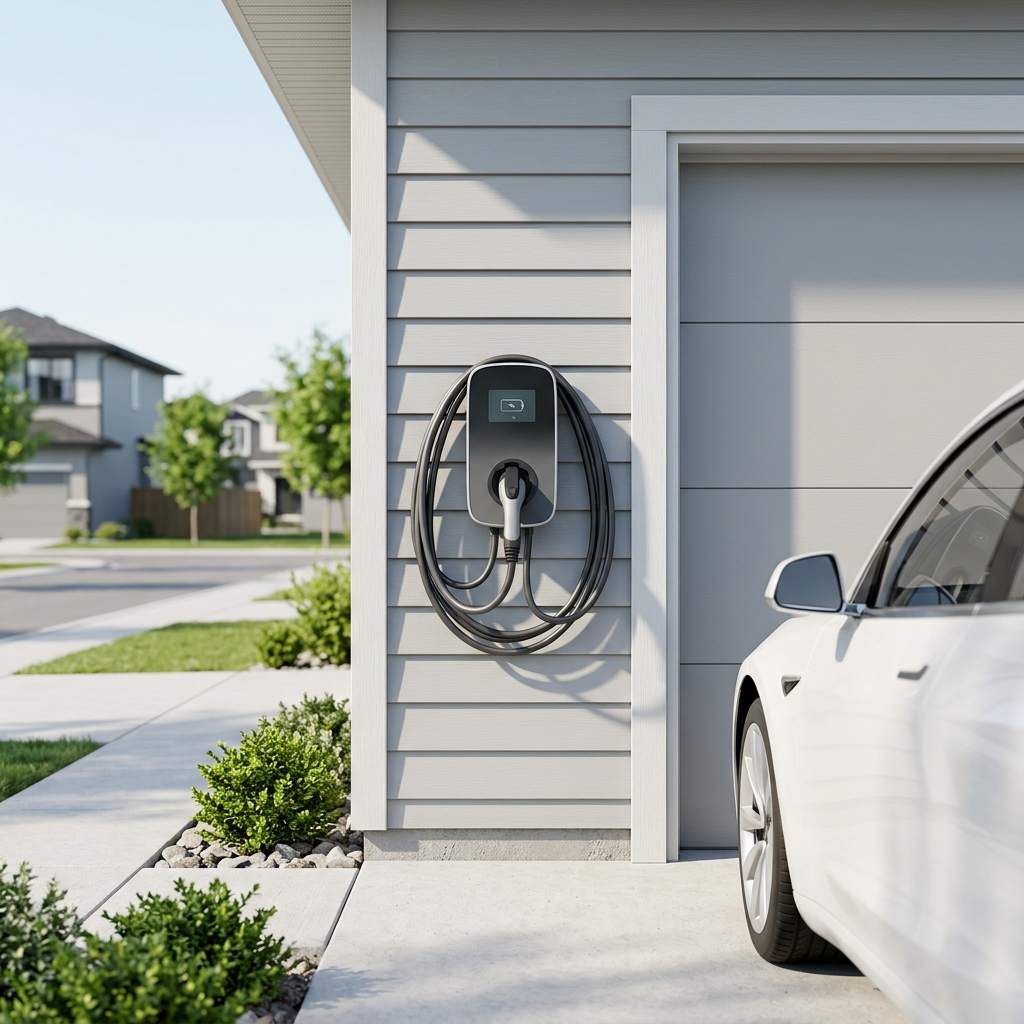
Several key factors determine what you’ll pay for EV charger installation in Calgary. Understanding these elements helps you anticipate costs and identify potential savings opportunities. Your home’s existing electrical infrastructure has the biggest impact on installation complexity and cost.
Electrical Panel Capacity and Upgrades
Your electrical panel’s available capacity determines whether you can simply add a new circuit for your EV charger or need to upgrade your entire panel. Most Level 2 EV chargers require a dedicated 40 to 60 amp circuit, which draws significant power from your home’s electrical system. Licensed electricians start by assessing your current panel to verify it has sufficient capacity and available breaker slots.
Homes built before 2000 often have 100-amp service panels that may be fully loaded with existing circuits. If your panel lacks capacity, you’ll need an upgrade to a 200-amp service to safely accommodate your EV charger. Panel upgrades in Calgary typically cost $1,500 to $3,500 depending on the scope of work, including new panel installation, updated wiring, permits, and inspections. This represents a significant addition to your project cost but provides long-term benefits for your home’s electrical capacity.
Panel location relative to your preferred charging spot affects installation expenses. If your panel sits in the garage where you plan to charge, installation costs stay lower. Panels located in basements or on opposite sides of your home require longer wire runs that increase material and labor costs. The physical condition and age of your existing panel also matter, as older panels may need replacement even if they technically have available capacity.
Distance from Panel to Charging Location
The wire run distance from your electrical panel to your charging location directly impacts material costs and installation time. Shorter distances require less copper wire, fewer mounting brackets, and less labor to complete the installation. Every additional meter of wire run adds to your project cost, particularly when routing requires complex pathways through walls, ceilings, or underground conduit.
Outdoor charging locations often require trenching to run protected conduit underground from your home to your parking area. Trenching costs vary based on distance and ground conditions but typically add $500 to $1,500 to your project. Some installations use surface-mounted conduit along exterior walls to avoid excavation costs, though this approach may be less visually appealing. Professional electricians help you evaluate routing options that balance cost, safety, and aesthetics.
Wall penetration and routing through finished spaces increase installation complexity and cost. Running wire through an unfinished basement ceiling is straightforward, but routing through finished walls with drywall, insulation, and paint requires additional care and repair work. Electricians may need to create access points, fish wires through walls, and patch openings afterward. Planning your charger location to minimize these challenges helps control installation costs.
Charger Type and Features
EV chargers come in various models with different features that affect both equipment and installation costs. Basic Level 2 chargers provide reliable charging without smart features and typically cost $500 to $700. These units work well if you simply need to charge your vehicle overnight without monitoring or scheduling capabilities. Mid-range chargers with Wi-Fi connectivity and smartphone apps cost $700 to $1,000 and let you monitor charging sessions, schedule charging during off-peak hours, and track energy usage.
Premium smart chargers with advanced features like load management, voice assistant integration, and enhanced weatherproofing range from $1,000 to $1,500 or more. These units make sense for households with multiple EVs or those wanting maximum control over their charging infrastructure. Installation costs remain similar across charger types since the electrical work stays consistent, though some smart chargers require additional setup for network connectivity.
Charging speed capabilities depend on both your charger’s maximum output and your vehicle’s onboard charging capacity. Chargers range from 16 amps (3.8 kW) to 80 amps (19.2 kW), with most homeowners choosing 32 to 40 amp models that balance charging speed with electrical requirements. Higher-powered chargers may require larger wire gauges and higher-capacity circuits that slightly increase installation costs. Your electrician helps you select appropriate charging capacity based on your vehicle’s capabilities and driving patterns.
Permits and Inspection Requirements
All EV charger installations in Calgary require electrical permits to ensure compliance with the Canadian Electrical Code and local regulations. Permit costs in Calgary typically range from $75 to $150 depending on the scope of work. Your licensed electrician usually handles permit applications as part of their service, including submitting required documentation and electrical plans to the City of Calgary.
Electrical inspections verify that your installation meets safety standards and code requirements. The City of Calgary requires inspections for all new electrical circuits, including EV charger installations. Inspection fees are included in your permit costs, but scheduling can add a few days to your project timeline. Most installations pass inspection on the first attempt when completed by experienced, licensed electricians who understand local code requirements.
Timelines for permit processing in Calgary typically run 3 to 5 business days for routine residential EV charger installations. Complex installations or those requiring panel upgrades may take longer to review. Planning ahead and allowing time for permits prevents delays in your installation schedule. Working with established electrical service providers familiar with Calgary’s permitting process ensures smooth approval and timely project completion.
Average Cost Breakdown for Calgary Homeowners
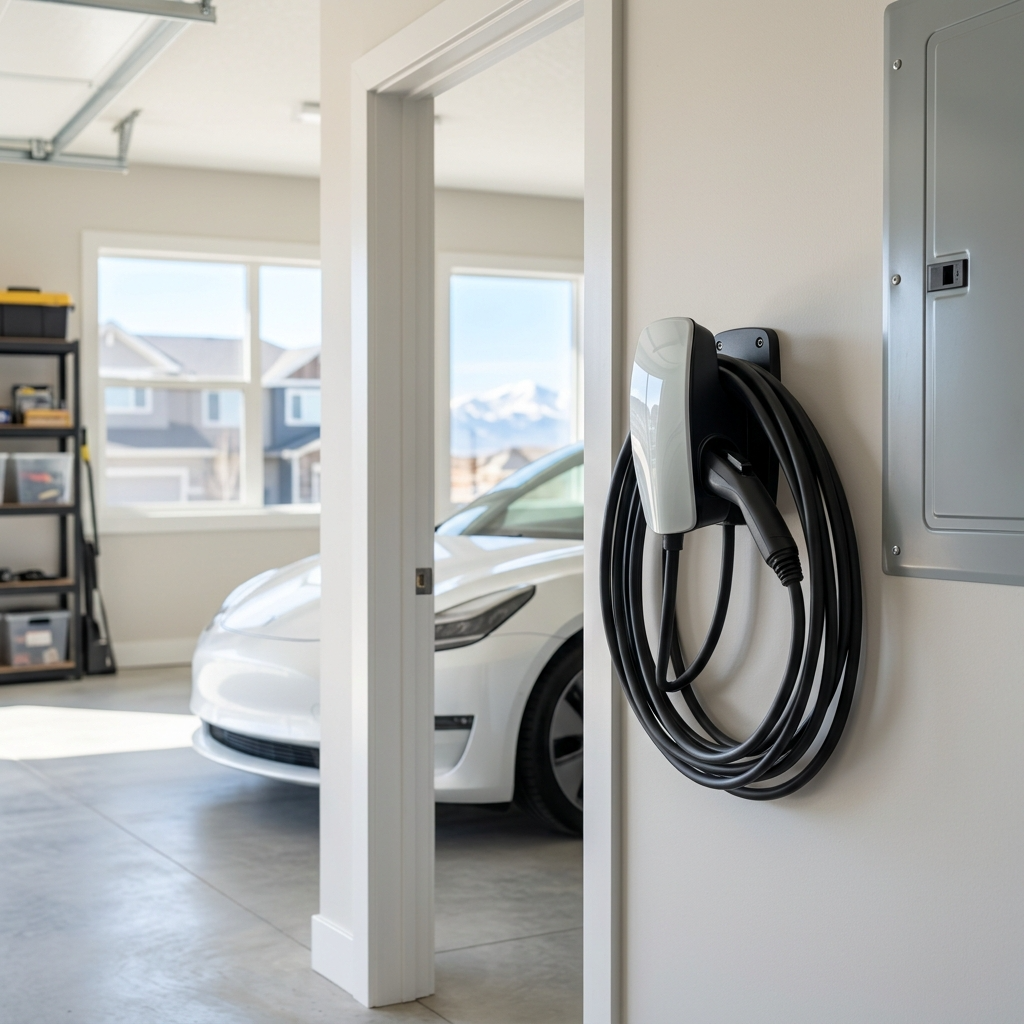
Understanding typical cost ranges helps you budget for your EV charger installation project. These figures represent common scenarios for Calgary residential installations in 2026 and provide a baseline for planning. Your specific costs may vary based on the factors discussed earlier, but most homeowners find their projects fall within these ranges.
Level 2 home charger equipment costs typically range from $600 to $1,200 for quality units from reputable manufacturers. Popular brands like ChargePoint, Flo, and JuiceBox offer reliable chargers in this price range with various feature sets. Basic models without smart connectivity start around $600, while Wi-Fi-enabled chargers with app control typically cost $800 to $1,000. Premium models with advanced load management and enhanced durability reach $1,200 to $1,500.
Standard installation labor costs in Calgary run $400 to $1,000 for straightforward installations. This includes running a new dedicated circuit from your electrical panel to your charging location, mounting the charger, making all electrical connections, and testing the system. Simple installations where your panel has available capacity and sits near your garage might cost toward the lower end of this range. More complex routing through finished spaces or longer wire runs push costs higher.
Additional materials and components needed for installation include copper wire, circuit breakers, conduit, mounting hardware, and weatherproof enclosures if required. Material costs typically add $150 to $400 to your project depending on wire run length and installation complexity. Outdoor installations require weather-rated components and additional protection that increase material costs compared to indoor garage installations.
Total estimated investment for common scenarios breaks down as follows. A basic installation with an existing 200-amp panel, available breaker space, and short wire run to your garage typically costs $1,100 to $1,800 total. Mid-complexity installations requiring moderate wire runs or minor electrical work range from $1,800 to $2,500. Complex installations needing panel upgrades or extensive wiring can reach $3,500 to $5,000 or more. Getting detailed estimates from licensed electricians gives you accurate pricing for your specific situation.
Commercial EV Charger Installation Considerations
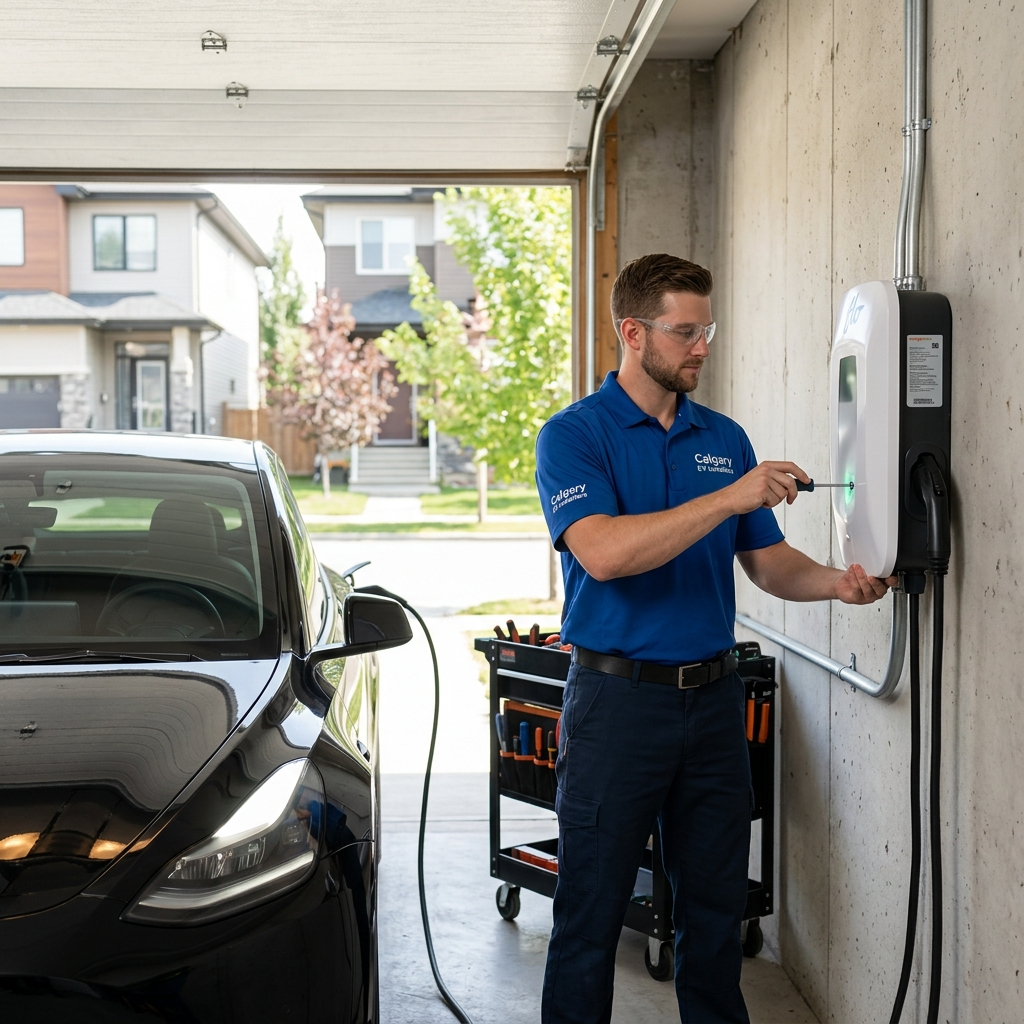
Business owners and property managers face different requirements when installing EV charging infrastructure. Commercial installations typically involve multiple charging stations, higher power requirements, and additional features that increase complexity and cost compared to residential projects. Understanding these factors helps you plan commercial EV charging installations effectively.
Multi-unit charging station requirements include load management systems that distribute available power across multiple vehicles. When several EVs charge simultaneously, load management prevents overloading your electrical service by intelligently allocating power based on vehicle needs and available capacity. These systems add $2,000 to $8,000 per installation depending on the number of charging ports and sophistication of the load management technology.
Ongoing maintenance and monitoring costs should factor into your long-term planning. Commercial charging stations require regular maintenance including software updates, payment system management if you charge users, and periodic inspection of electrical components. Many businesses opt for service agreements with charging network providers that handle maintenance, billing, and customer support for $100 to $300 per charger monthly. These agreements ensure reliable operation and positive user experiences.
ADA compliance and accessibility standards apply to commercial charging installations in publicly accessible locations. Charging stations must meet clearance requirements, mounting height specifications, and accessible parking space dimensions outlined in accessibility codes. Planning your installation layout with accessibility in mind prevents costly modifications later and ensures all customers can use your charging infrastructure.
Ways to Reduce Your EV Charger Installation Cost
Several strategies help you minimize EV charger installation expenses without compromising quality or safety. Smart planning and taking advantage of available incentives can significantly reduce your out-of-pocket costs. These approaches help make EV charging infrastructure more affordable for Calgary homeowners and businesses.
Available federal and provincial rebates for EV charging infrastructure provide substantial savings. The federal Zero-Emission Vehicles Infrastructure Program offers rebates up to $5,000 for residential charging installations in some cases, though program availability and funding levels change periodically. Alberta’s Green Transit Incentives Program has historically provided provincial support for EV infrastructure, though specific rebate amounts and eligibility requirements vary by program year and available funding.
Municipal incentives specific to Calgary may include expedited permit processing for EV infrastructure projects or reduced permit fees to encourage charging station installations. The City of Calgary periodically updates its climate action initiatives that may include EV charging incentives. Checking with the city’s planning department or your electrical contractor about current programs ensures you don’t miss available savings opportunities.
Optimal charger placement to minimize wiring distance represents one of the most effective cost-saving strategies. Installing your charger on the same wall or nearby location as your electrical panel dramatically reduces wire run costs and installation time. Even moving your charging location a few meters closer to your panel can save $200 to $400 in materials and labor. Work with your electrician during the planning phase to identify locations that balance convenience with cost efficiency.
Scheduling installation during new construction or renovation provides significant savings opportunities. If you’re building a new home or renovating your garage, adding EV charging infrastructure during this phase costs far less than retrofitting later. Open walls and ceilings make wire routing simple, and coordination with other electrical work reduces overall labor time. Many builders now include EV charging readiness as a standard feature, running conduit and circuits during construction even if you’re not installing a charger immediately.
Choosing appropriate charger capacity for your needs prevents overspending on more power than you require. If your daily driving averages 50 kilometers and you park at home every night, a basic 32-amp charger provides more than enough charging speed. You don’t need an 80-amp charger designed for high-mileage drivers or large battery EVs unless your specific situation requires that capacity. Right-sizing your charger selection based on actual needs rather than maximum possible capacity helps control equipment costs.
What’s Included in Professional Installation?
Hiring licensed electricians for your EV charger installation provides comprehensive service that covers all aspects of the project. Understanding what professional installation includes helps you evaluate quotes and ensures you receive complete, safe, and code-compliant charging infrastructure. Quality electrical service providers deliver turnkey solutions from initial assessment through final testing.
Initial site assessment and electrical system evaluation begin your project. Experienced electricians visit your property to examine your electrical panel, identify the optimal charging location, measure wire run distances, and assess any challenges specific to your installation. This assessment provides the foundation for accurate pricing and project planning. Electricians verify your panel’s available capacity, check for necessary upgrades, and discuss your charging needs to recommend appropriate equipment.
Permit acquisition and inspection coordination handle all regulatory requirements. Professional electricians familiar with Calgary’s permitting process submit applications, provide required documentation, and schedule inspections on your behalf. They ensure installations meet Canadian Electrical Code standards and local requirements, preventing issues that could delay your project or create safety hazards. This service saves you time and ensures compliance with all applicable regulations.
Complete wiring and circuit installation includes running new dedicated circuits from your electrical panel to your charging location. Electricians use properly sized copper wire, install required conduit protection, add circuit breakers to your panel, and make all necessary electrical connections. They follow code requirements for wire routing, support, and protection to ensure safe, long-lasting installations. All work meets or exceeds minimum standards for electrical installations.
Charger mounting and weatherproofing secure your equipment and protect it from environmental conditions. Electricians mount chargers at appropriate heights using proper anchoring methods, ensure cables route neatly, and add weatherproof enclosures if needed for outdoor installations. They verify mounting locations provide convenient access while protecting equipment from physical damage and weather exposure. Proper mounting prevents damage and ensures your charger operates reliably for years.
Testing, commissioning, and user training complete your installation. After finishing electrical work and mounting your charger, electricians test all circuits, verify proper operation, and confirm your charger communicates correctly with your vehicle. They walk you through charger operation, explain any smart features, and answer your questions about daily use and maintenance. This training ensures you’re comfortable using your new charging equipment from day one.
Warranty coverage on labor and equipment protects your investment. Reputable electrical contractors provide warranties on their installation workmanship, typically covering labor for one to two years. Charger manufacturers offer equipment warranties ranging from one to five years depending on the model. Understanding warranty terms and what they cover gives you peace of mind and recourse if issues arise after installation.
How Long Does EV Charger Installation Take?
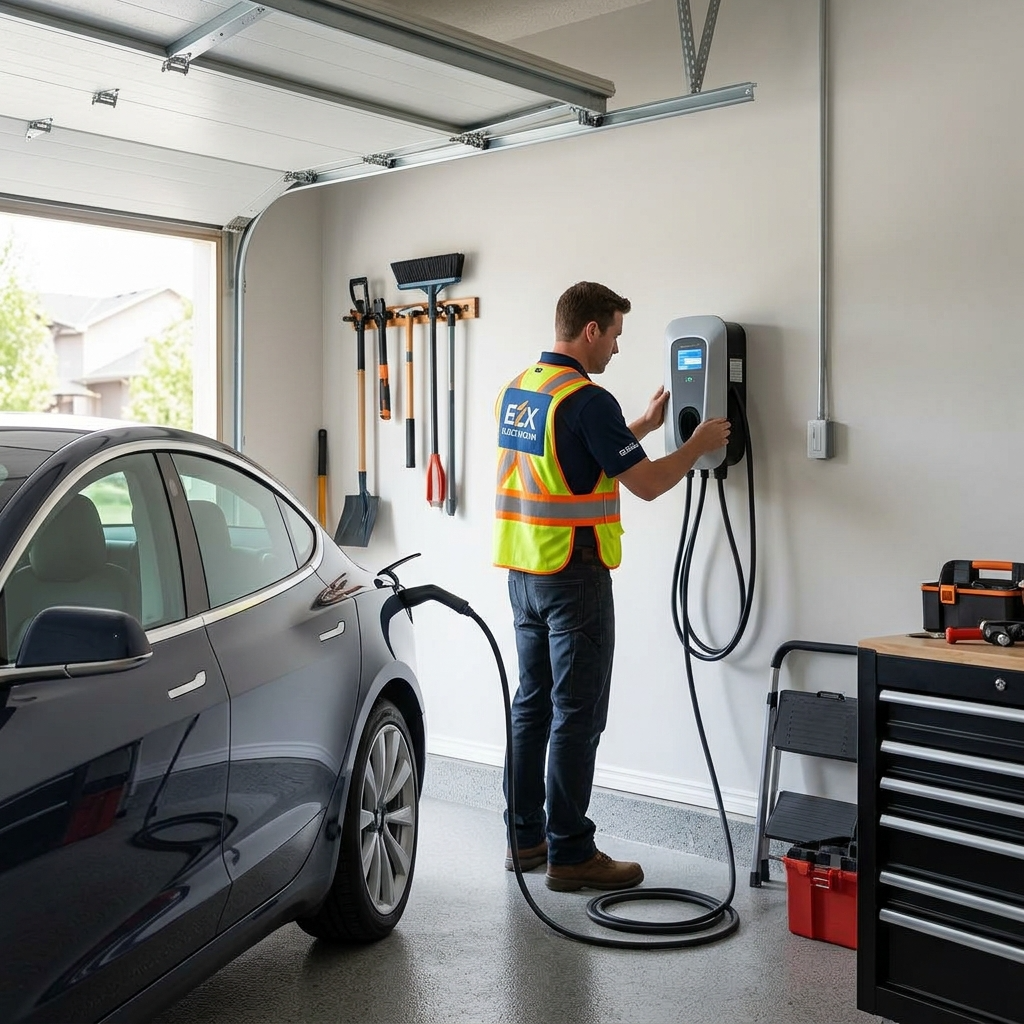
Project timelines help you plan when you’ll have operational charging infrastructure at your property. Most EV charger installations in Calgary complete within one to two weeks from initial consultation to final testing, though this varies based on several factors. Understanding typical timelines helps you coordinate vehicle purchases and manage expectations.
The typical timeline from consultation to completion breaks down into several phases. Initial consultation and site assessment usually occur within a few days of contacting an electrical service provider. After assessment, electricians prepare detailed quotes and order equipment if needed, which takes two to five business days. Permit applications require three to five business days for approval in Calgary. Once permits are approved, actual installation work typically takes four to eight hours for straightforward projects.
Factors that may extend installation duration include equipment availability, permit delays, weather conditions for outdoor work, and complexity of electrical upgrades. If your installation requires a panel upgrade, add several days for the additional electrical work and separate inspection. Custom or specialty chargers may have longer lead times for delivery. Complex installations requiring extensive wire routing or coordination with other trades can take multiple days to complete.
Permit processing timeframes in Calgary typically run three to five business days for routine residential EV charger installations. Submitting complete applications with proper documentation prevents delays in the review process. Peak construction seasons may extend processing times slightly as city departments handle higher application volumes. Your electrician monitors permit status and schedules installation work promptly after approval.
Same-day installation possibilities exist for simple setups where you’ve pre-purchased equipment, your panel has available capacity, and the charging location sits near your electrical panel. Some electrical service providers offer expedited installation scheduling for straightforward projects. However, you should still allow time for proper permits and inspections to ensure code-compliant installations. Rushing the process to skip permits creates liability issues and potential safety hazards.
DIY Installation vs. Professional Service: Is It Worth the Savings?
Some homeowners consider installing EV chargers themselves to save on labor costs. While DIY electrical work may seem attractive from a cost perspective, several important factors make professional installation the safer and more reliable choice for most situations. Understanding the risks and requirements of DIY EV charger installation helps you make informed decisions.
Safety risks and code violations with DIY approaches represent serious concerns. EV charger installations involve working with 240-volt circuits that can cause severe injury or death if mishandled. Improper wiring, incorrectly sized circuits, missing ground connections, or faulty installations create fire hazards and electrical shock risks. The Canadian Electrical Code requires specific installation methods, materials, and safety measures that untrained individuals often overlook. Code violations discovered during home sales or insurance claims can create expensive remediation requirements.
Insurance and warranty implications affect both your charger equipment and home insurance coverage. Most EV charger manufacturers require professional installation by licensed electricians to maintain equipment warranties. DIY installations void these warranties, leaving you without recourse if equipment fails. Home insurance policies may deny claims for electrical fires or damage stemming from unpermitted or non-code-compliant electrical work. The potential liability far exceeds any labor cost savings from DIY installation.
Complexity of electrical work required goes beyond basic wiring skills. Proper EV charger installation involves calculating electrical loads, sizing circuits correctly, selecting appropriate wire gauges, installing proper overcurrent protection, and verifying ground fault protection. Electricians use specialized tools for testing and verification that most homeowners don’t own. They understand nuances of local code requirements and inspection standards that ensure safe, compliant installations.
Long-term reliability and professional guarantees provide value that extends beyond initial installation. Licensed electricians stand behind their work with warranties and professional liability coverage. If issues arise after installation, you have recourse and support for repairs. DIY installations leave you solely responsible for troubleshooting and fixing problems. Professional installation ensures your charging infrastructure operates safely and reliably for the long term.
Why licensed electricians are essential for EV charging installations comes down to safety, code compliance, and peace of mind. Alberta requires licensed electricians to perform electrical work on homes and buildings. Attempting DIY installation violates these regulations and creates liability if accidents occur. Licensed electricians carry insurance, understand current code requirements, obtain proper permits, and complete installations that pass inspection. The relatively modest cost of professional installation provides enormous value through safety, reliability, and legal compliance.
Questions to Ask Your Electrician Before Installation
Selecting the right electrical contractor ensures quality installation and positive project experience. Asking specific questions before committing to a service provider helps you evaluate qualifications and set clear expectations. These questions guide your selection process and prevent misunderstandings about project scope and deliverables.
Licensing, insurance, and experience verification confirm your electrician meets professional standards. Ask to see current electrical licenses issued by Alberta’s Safety Codes Council. Verify they carry liability insurance and workers compensation coverage to protect you from liability if accidents occur during installation. Ask specifically about their experience with EV charger installations and how many similar projects they’ve completed in Calgary. Electricians specializing in EV infrastructure bring valuable expertise to your project.
Detailed written estimate expectations ensure you understand all costs before work begins. Request itemized quotes that separate equipment costs, labor, materials, permits, and any additional fees. Written estimates should specify exactly what’s included in the quoted price and identify potential additional costs if complications arise. Clear documentation prevents surprise charges and provides a reference point if disputes occur about project scope or pricing.
Timeline commitments and scheduling flexibility help you plan around the installation project. Ask when work can begin, how long installation will take, and whether the electrician can accommodate your scheduling preferences. Understand their process for permit applications and inspection scheduling. Reliable contractors provide realistic timelines and communicate promptly about any schedule changes. Avoid contractors who pressure you to start immediately without proper permits or planning.
Warranty terms and post-installation support protect your investment after project completion. Ask what warranty the contractor provides on installation workmanship and how long coverage lasts. Understand what issues the warranty covers and the process for requesting warranty service. Inquire about ongoing support if you have questions about operating your charger or need future electrical service. Contractors committed to customer satisfaction stand behind their work.
Emergency service availability for future needs provides peace of mind if you experience electrical issues outside normal business hours. While EV charger installations rarely require emergency service, knowing your electrician offers 24/7 emergency support adds value. Ask about their emergency response times and any additional fees for after-hours service. Established electrical service providers with round-the-clock availability demonstrate commitment to customer service.
Frequently Asked Questions
How much does it cost to install a Level 2 EV charger in Calgary?
Most Calgary homeowners pay between $1,100 and $2,500 for complete Level 2 EV charger installation. This includes the charger unit ($600 to $1,200), professional installation labor ($400 to $1,000), materials ($150 to $400), and permits ($75 to $150). Your specific cost depends on your electrical panel capacity, distance from panel to charging location, and installation complexity. Simple installations in garages with nearby panels and available circuit capacity cost less, while projects requiring panel upgrades or extensive wiring cost more.
Do I need to upgrade my electrical panel for an EV charger?
Panel upgrades are necessary if your existing panel lacks sufficient capacity or available breaker slots for the dedicated 40 to 60 amp circuit required by most Level 2 chargers. Homes with 100-amp service panels or fully loaded 200-amp panels typically need upgrades. A licensed electrician assesses your specific electrical system during a site evaluation to determine if upgrades are needed. Panel upgrades add $1,500 to $3,500 to your installation cost but provide long-term benefits by increasing your home’s overall electrical capacity.
Are there rebates available for EV charger installation in Calgary?
Federal programs like the Zero-Emission Vehicles Infrastructure Program periodically offer rebates up to $5,000 for residential charging installations, though program availability and funding levels change over time. Alberta has provided provincial incentives through programs like the Green Transit Incentives Program, with specific rebate amounts varying by program year. The City of Calgary may offer municipal incentives including expedited permit processing or reduced fees. Check with your electrical contractor and government websites for current program details and eligibility requirements.
How long does professional EV charger installation take?
Most EV charger installations complete within one to two weeks from initial consultation to final testing. The actual installation work takes four to eight hours for straightforward projects, but you should factor in time for site assessment, permit processing, and inspection scheduling. Permit applications in Calgary typically process within three to five business days. Simple installations with pre-approved permits and available equipment may complete faster, while complex projects requiring panel upgrades take longer.
Can I install an EV charger myself to save money?
DIY EV charger installation is not recommended and violates Alberta regulations requiring licensed electricians to perform electrical work. Safety risks include electrical shock, fire hazards, and code violations that create liability issues. Most charger warranties require professional installation, and home insurance may deny claims for damage from unpermitted electrical work. The modest labor cost savings don’t justify the significant risks and potential long-term costs of DIY installation.
What permits are required for EV charger installation in Calgary?
All EV charger installations in Calgary require electrical permits to ensure compliance with the Canadian Electrical Code and local regulations. Permit costs typically range from $75 to $150 and include required electrical inspections. Your licensed electrician handles permit applications, submits required documentation, and coordinates inspections as part of professional installation service. Permits verify that installations meet safety standards and provide documentation for future home sales.
Does installing an EV charger increase my home insurance costs?
Professionally installed EV chargers with proper permits typically don’t increase home insurance costs. Some insurers may request documentation of professional installation and permits but rarely adjust premiums for properly installed charging equipment. Contact your insurance provider to report the installation and confirm any documentation requirements. Unpermitted or DIY installations may affect coverage and could lead to denied claims if electrical issues cause damage.
What’s the difference between hardwired and plug-in EV chargers?
Hardwired chargers connect directly to your electrical system through permanent wiring and cannot be unplugged or moved. These installations are cleaner looking with no visible plugs and work well for permanent installations. Plug-in chargers connect through dedicated NEMA 14-50 outlets (similar to electric dryer outlets) and can be unplugged if needed. Plug-in models offer flexibility to take the charger with you if you move or upgrade. Installation costs are similar for both types, though hardwired installations are slightly more common for residential properties.