Your home’s electrical panel is more important than you might think. Most people ignore it completely until something goes wrong, but knowing when to upgrade can prevent serious safety hazards and expensive emergency repairs. This guide walks you through the clear warning signs that indicate your panel needs replacement, what the upgrade process looks like, and how to make informed decisions about your home’s electrical system.
What Is an Electrical Panel and Why Does It Matter?
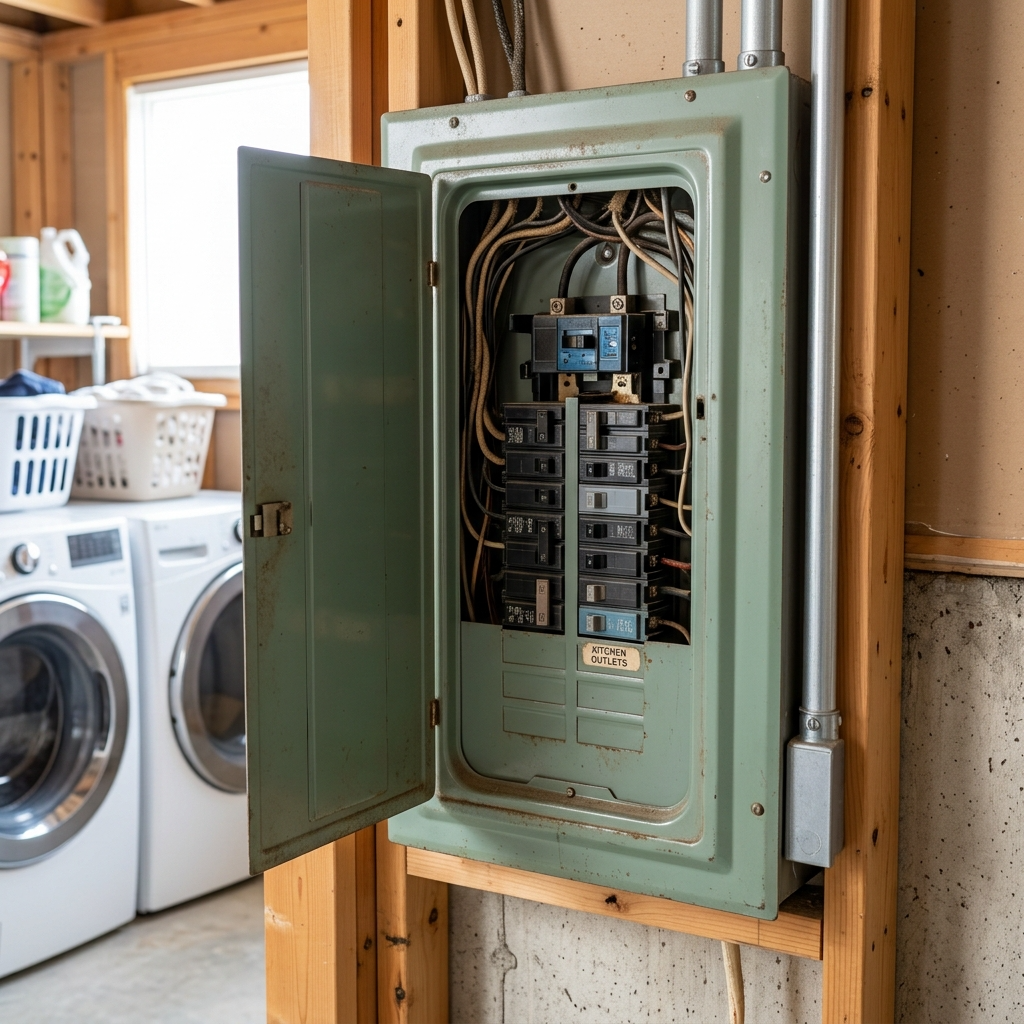
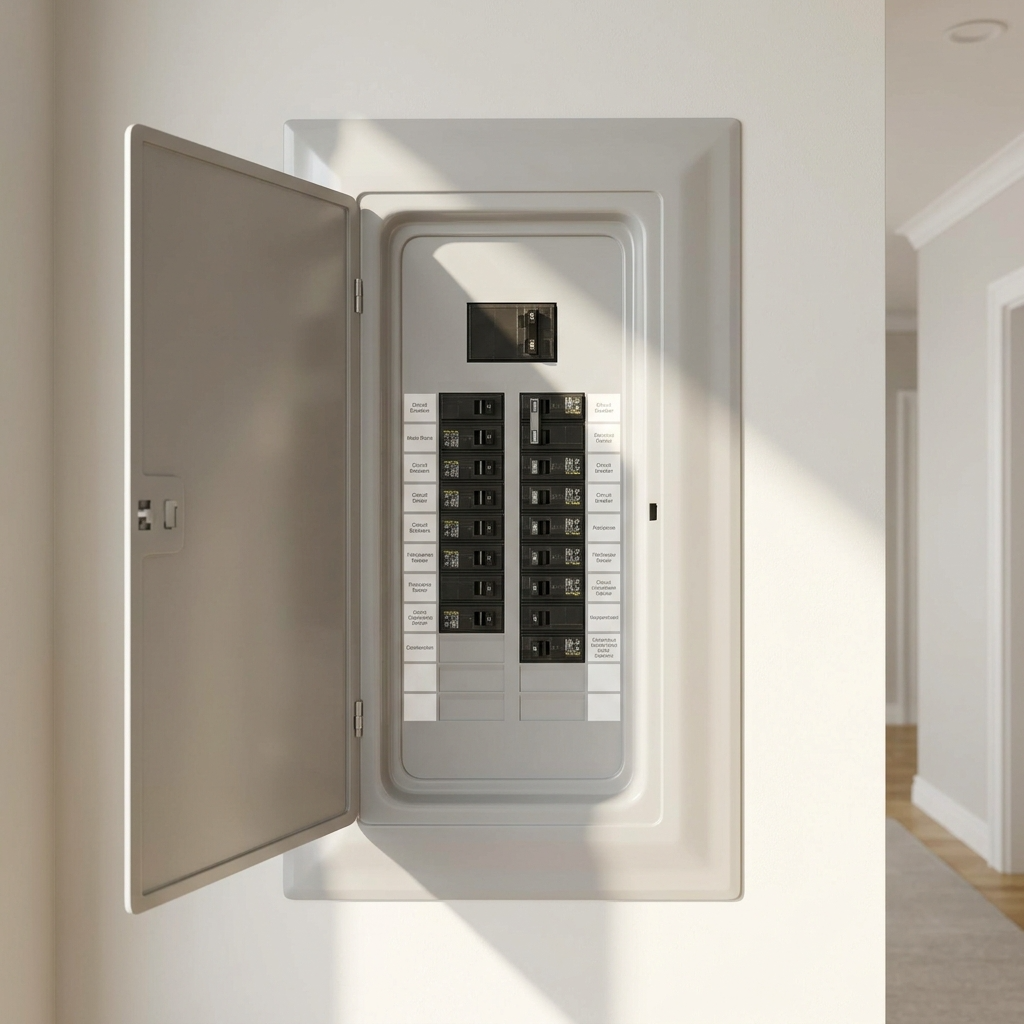
Your electrical panel, also called a breaker box or service panel, is the heart of your home’s electrical system. It distributes power throughout your property and protects against electrical overloads and fire hazards. Understanding its role helps you recognize when an upgrade becomes necessary for safety and functionality.
Think of your panel as the central command station for all electricity flowing into your home. When you flip a light switch or plug in an appliance, that power routes through your panel first. The breakers inside act as safety switches that cut power when circuits become overloaded. Without a properly functioning panel, you face increased fire risks and potential damage to your electrical devices.
Top Warning Signs Your Electrical Panel Needs an Upgrade
Recognizing the signs early can prevent dangerous situations and costly emergency repairs. Most homeowners miss these indicators until a major problem develops, but staying alert to these warnings protects your family and property.
Frequent Circuit Breaker Trips
If your breakers trip regularly, it indicates your panel cannot handle your electrical demand. Modern homes require more power than panels installed 20 years ago were designed to provide. When you notice breakers tripping weekly or even monthly, your system is telling you it cannot keep up with your needs.
This happens because older panels typically provide 60 to 100 amps of service, while today’s homes often need 200 amps to run efficiently. Every time you run the dishwasher, charge devices, and use the air conditioner simultaneously, you are pushing your system beyond its limits. Repeated tripping wears down your breakers and creates fire hazards over time.
Flickering or Dimming Lights
Lights that flicker when you use appliances suggest your panel is struggling to distribute adequate power. This is especially common in older homes with 60-amp or 100-amp service. You might notice lights dim when the washing machine starts or the furnace kicks on.
This flickering is not just annoying, it signals that your electrical system cannot maintain consistent power distribution. The voltage drop that causes dimming can also damage sensitive electronics like computers, televisions, and smart home devices. Addressing this issue protects your investments and prevents more serious electrical problems.
Burning Smell or Scorch Marks
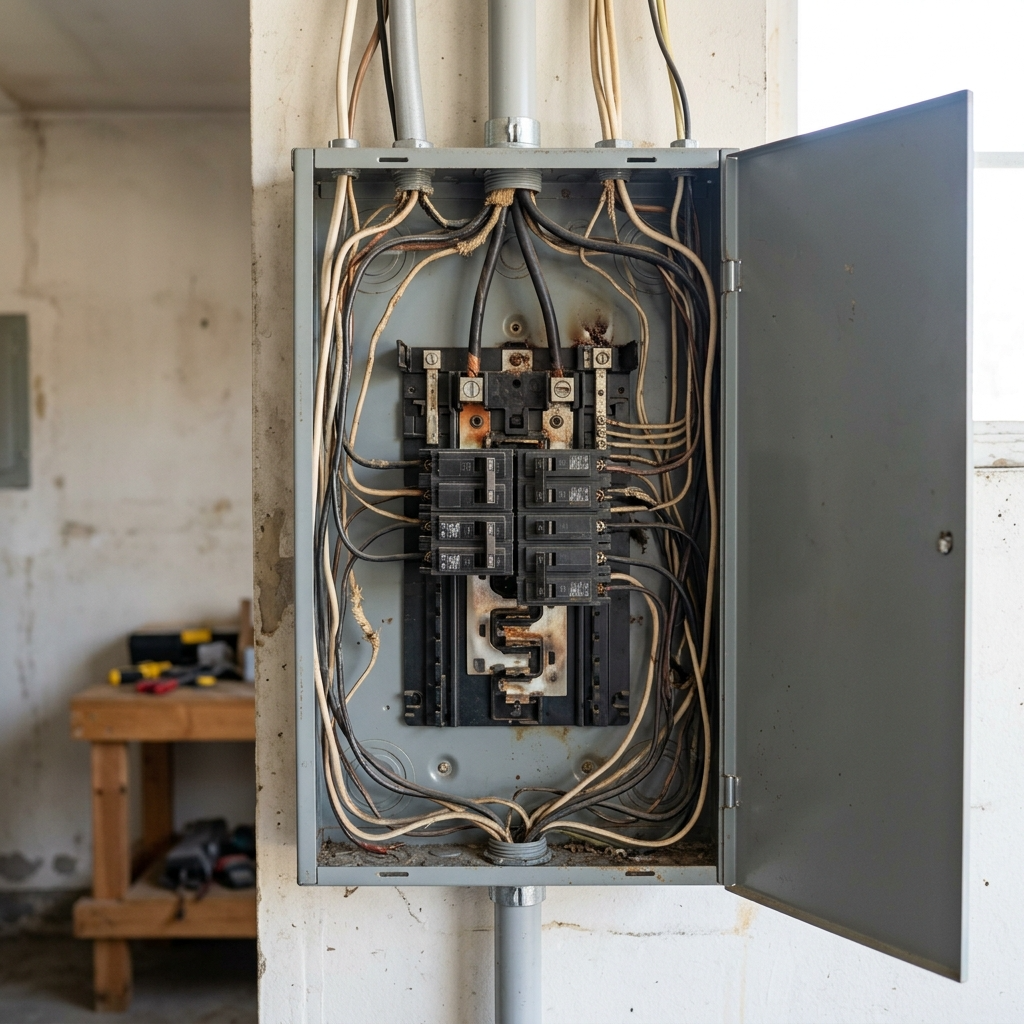
Any burning odor or visible discoloration around your panel requires immediate attention. These are serious fire hazards that demand professional inspection right away. Never ignore a burning smell coming from your electrical panel or any outlet in your home.
Scorch marks indicate overheating, which means wires or connections inside the panel are failing. This overheating can ignite surrounding materials and cause house fires. If you smell burning plastic or see any darkening around your panel, contact a licensed electrician immediately and avoid using high-power appliances until the problem is resolved.
Fuses Instead of Circuit Breakers
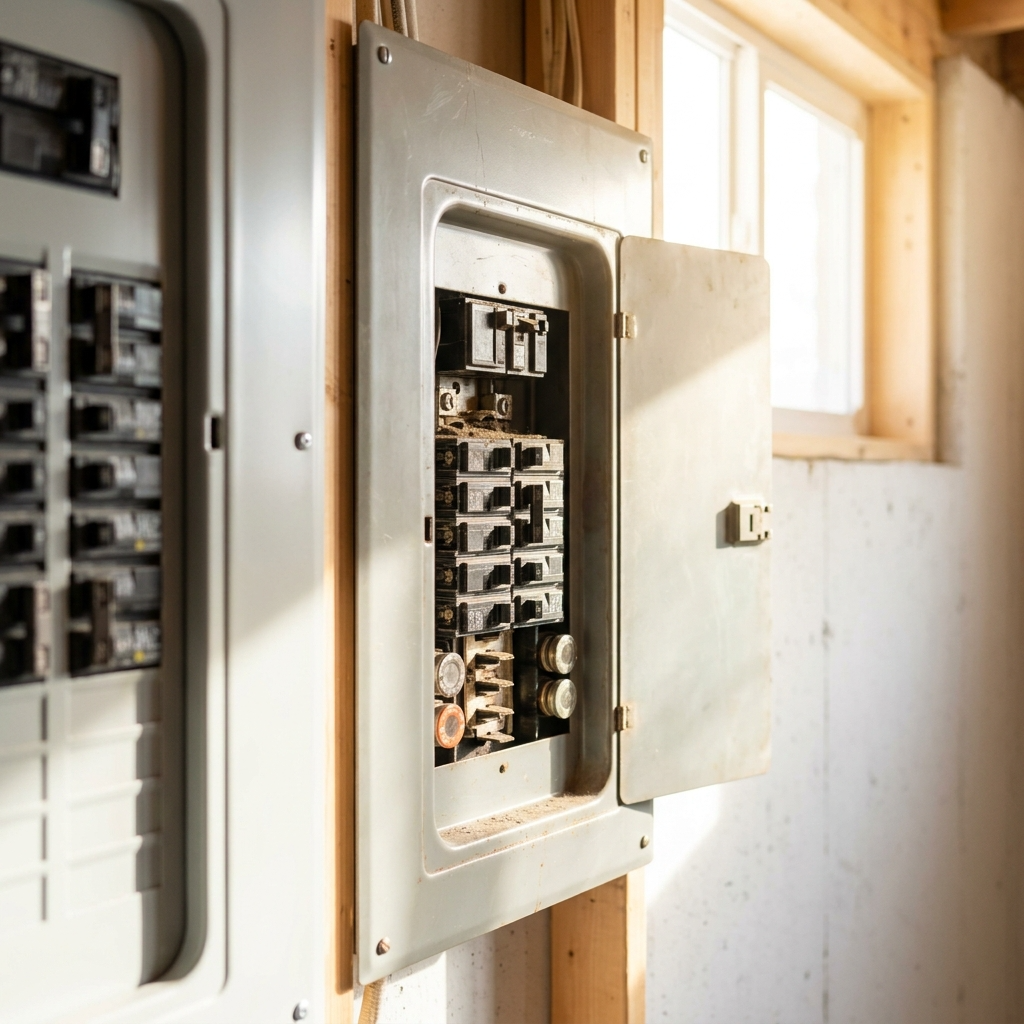
Homes still using fuse boxes have outdated electrical systems. Upgrading to a modern breaker panel improves safety and meets current electrical codes. Fuse boxes were standard before the 1960s, and while they worked for their time, they cannot meet today’s safety standards.
Fuses require manual replacement each time they blow, and homeowners sometimes install the wrong amperage fuses, creating fire risks. Modern circuit breakers simply reset with a switch and provide better protection. If your home still has a fuse box, upgrading should be a priority regardless of other factors.
Rust, Corrosion, or Moisture
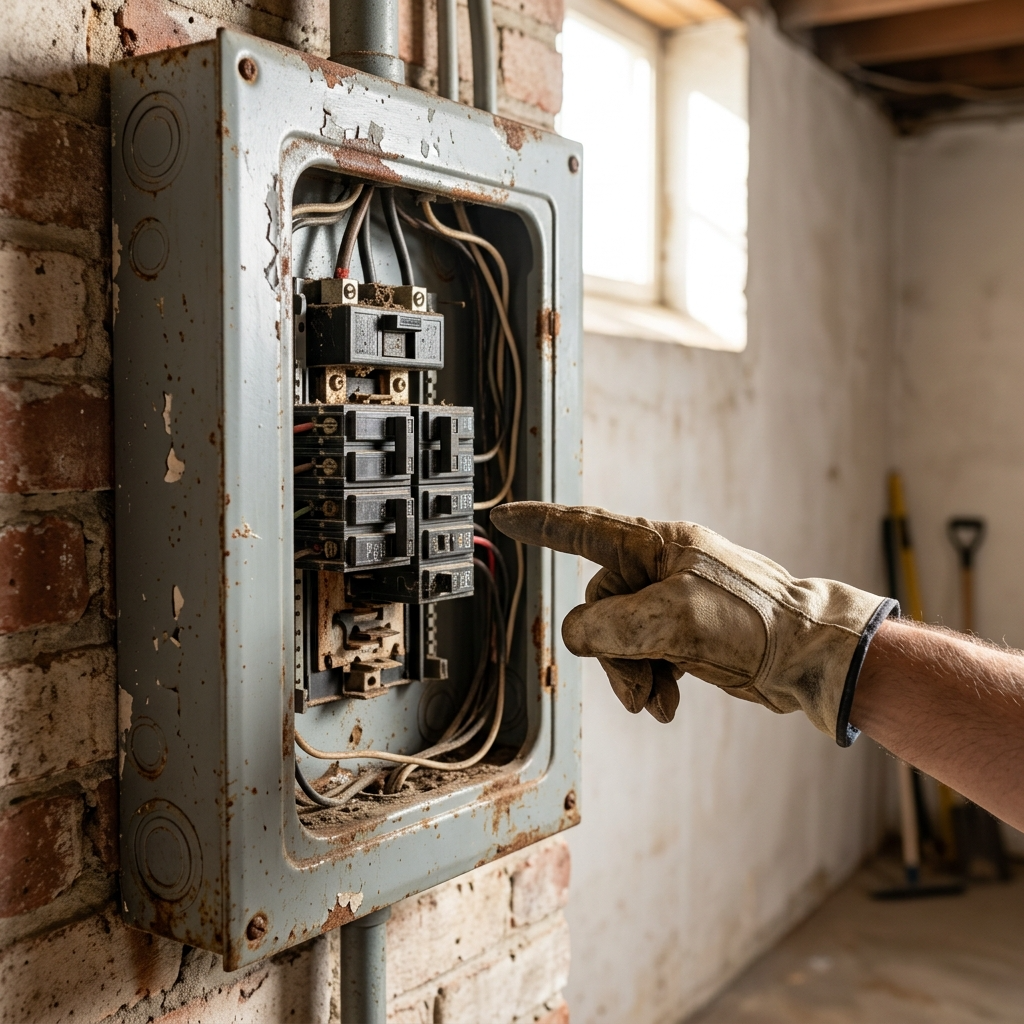
Water damage or rust inside your panel creates dangerous conditions. Moisture and electricity create serious shock and fire risks. Even small amounts of condensation can corrode electrical connections and cause short circuits.
If you notice rust on the panel door or inside the box, water has entered your electrical system. This commonly happens in basements prone to flooding or homes with roof leaks near the panel location. Water damage compromises the insulation on wires and creates paths for electricity to arc, potentially starting fires or causing electrocution.
How Old Electrical Panels Put Your Property at Risk
Electrical panels typically last 25 to 40 years. If your home was built before 1990 and has never had a panel upgrade, you are likely operating with insufficient capacity for today’s electrical demands. Older panels also lack modern safety features like AFCI and GFCI protection that prevent electrical fires and shocks.
Age alone does not always require replacement, but older panels combined with increased electrical usage create problems. Homes built in the 1970s or 1980s were designed for families using far fewer electronic devices. Today, you might have multiple computers, smart home systems, electric vehicle chargers, and high-efficiency appliances all drawing power simultaneously. Your panel needs capacity to handle this modern lifestyle safely.
Beyond capacity issues, older panels lack arc-fault circuit interrupters (AFCI) and ground-fault circuit interrupters (GFCI) that are now required by electrical codes. These safety devices detect dangerous electrical conditions and shut off power before fires or shocks occur. Upgrading your panel brings these protections to your entire home.
When Home Renovations Require Panel Upgrades
Major renovations often trigger the need for increased electrical capacity. Adding new rooms, finishing basements, installing central air conditioning, or upgrading to electric heating systems all increase your power requirements. Before starting any significant renovation, have a licensed electrician assess whether your current panel can support the additional load.
Many homeowners discover their panel needs upgrading when they apply for renovation permits. Building codes require adequate electrical capacity for new construction, and inspectors will not approve projects that overload existing systems. Planning for a panel upgrade early in your renovation process prevents delays and budget surprises.
Finishing a basement, for example, adds lighting, outlets, and potentially new appliances like a second refrigerator or entertainment system. A kitchen remodel might include new ovens, cooktops, and high-power appliances that demand dedicated circuits. Each of these additions draws from your total electrical capacity, and older panels simply cannot accommodate these loads safely.
Upgrading for Electric Vehicle Charger Installation
Installing an EV charger typically requires 40 to 50 amps of dedicated power. Many older homes with 100-amp or 150-amp service cannot accommodate this additional demand without a panel upgrade. Planning your electrical capacity before purchasing an electric vehicle saves time and prevents installation complications.
Level 2 EV chargers, the type most homeowners install for convenient overnight charging, draw significant continuous power. If your home already operates near its electrical capacity, adding a charger creates overload conditions. Electricians cannot legally install chargers that exceed your panel’s safe capacity.
The good news is that panel upgrades for EV charging often qualify for local rebates or incentives. When you combine a panel upgrade with charger installation, you prepare your home for the future while potentially reducing overall project costs. Many homeowners find that upgrading to 200-amp service provides room for current EV charging needs plus capacity for future additions.
Modern Appliances and Increased Power Demands
Today’s homes use significantly more electricity than properties built even 20 years ago. High-efficiency HVAC systems, smart home technology, multiple computers, gaming systems, and kitchen appliances all draw substantial power. If you are adding major appliances or upgrading to energy-intensive equipment, your panel may need expansion.
Consider how your electrical usage has changed over the past decade. Most families now charge multiple phones and tablets daily, run computers for work and school, operate smart thermostats and security systems, and use streaming devices throughout the home. Each device individually draws modest power, but combined they create loads older panels never anticipated.
Kitchen renovations particularly stress electrical systems. Modern refrigerators, while more efficient, often include additional features like ice makers and water dispensers. Induction cooktops, convection ovens, and high-power blenders all require dedicated circuits. If you are updating your kitchen appliances to modern standards, evaluate whether your panel can handle the increased demand.
How Much Does an Electrical Panel Upgrade Cost?
Panel upgrade costs vary based on several factors including the amperage increase, permit requirements, labor complexity, and whether service line upgrades are needed. In Calgary, expect transparent pricing that accounts for materials, labor, permits, and inspections. Licensed professionals provide detailed estimates before beginning work, ensuring no surprise costs.
A typical upgrade from 100-amp to 200-amp service involves replacing the entire panel, upgrading the main service wires, and potentially working with the utility company to increase the service drop to your home. Material costs include the new panel, breakers, wiring, and connection hardware. Labor costs reflect the skill and licensing required for safe installation.
Permit fees in Calgary cover inspections that verify your upgrade meets current electrical codes. While permits add to upfront costs, they protect you by ensuring work is completed safely and correctly. Many insurance companies require permitted electrical work, and unpermitted upgrades can create problems when selling your home.
Investing in a panel upgrade provides long-term value. You gain increased capacity for modern electrical needs, improved safety for your family, compliance with current codes, and potentially lower insurance premiums. When you work with experienced professionals who have served the Calgary area for over 15 years, you receive quality workmanship and transparent pricing throughout the project.
The Panel Upgrade Process: What to Expect
A professional panel upgrade typically takes 8 to 12 hours and requires temporary power shutdown. Licensed electricians will obtain necessary permits, coordinate with your utility provider, install the new panel with proper grounding, update wiring as needed, and arrange for final inspection. Working with experienced technicians ensures code compliance and safety throughout the process.
The process starts with a detailed assessment of your current electrical system. Electricians evaluate your existing panel, measure total electrical load, identify any wiring issues, and determine the appropriate amperage for your upgrade. This planning phase prevents problems during installation and ensures you receive the right solution for your needs.
On installation day, the power company temporarily disconnects service to your home. Electricians then remove the old panel, install the new unit, connect all circuits with proper labeling, and verify everything functions correctly before restoring power. Professional installers minimize disruption to your daily routine and complete work efficiently.
After installation, a city inspector verifies that all work meets electrical codes. This final inspection provides peace of mind that your upgrade is safe and compliant. Licensed professionals handle all inspection scheduling and address any required adjustments, making the process smooth and stress-free for homeowners.
Can You Delay an Electrical Panel Upgrade?
While budget considerations exist, delaying a necessary panel upgrade creates serious risks. Overloaded panels cause electrical fires, damage expensive appliances and electronics, void home insurance in some cases, and create safety hazards for your family. If you have noticed warning signs, schedule a professional inspection to assess your situation and prioritize safety.
Electrical fires cause billions in property damage annually, and outdated or overloaded panels contribute significantly to these statistics. The cost of repairing fire damage far exceeds panel upgrade expenses. More importantly, electrical fires endanger lives and can result in tragic losses that no amount of money can replace.
Some insurance companies refuse coverage or increase premiums for homes with known electrical deficiencies. If your insurer discovers you delayed addressing panel problems after recognizing warning signs, they might deny claims related to electrical damage. This risk alone makes prompt upgrades financially prudent.
If budget constraints prevent immediate upgrades, discuss options with qualified electricians. They might suggest interim solutions like load management or prioritized repairs that improve safety until full replacement becomes possible. Never simply ignore warning signs and hope problems resolve themselves.
Choosing the Right Amperage for Your Panel Upgrade
Most modern homes require 200-amp service to meet current and future electrical needs. Smaller properties or condos may function adequately with 150-amp service, while larger homes or properties with extensive electrical demands might need 300-amp or 400-amp service. A qualified electrician evaluates your specific requirements based on square footage, appliances, and planned additions.
Calculating required amperage involves adding up all potential electrical loads in your home. Electricians consider square footage, heating and cooling systems, major appliances, lighting, outlets, and any planned additions like EV chargers or workshop equipment. They then apply safety factors to ensure your panel operates well below maximum capacity.
Choosing adequate amperage now prevents another upgrade in a few years. While 200-amp service handles most residential needs, homes with electric heating, multiple air conditioning zones, workshops, or plans for future additions might benefit from higher capacity. Investing in appropriate capacity during your initial upgrade saves money and hassle long-term.
Don’t automatically assume bigger is better, though. Oversizing your panel unnecessarily increases costs without providing benefits. Experienced electricians recommend appropriate amperage based on your actual needs, balancing current requirements with reasonable future expansion.
Why Professional Installation Matters for Panel Upgrades
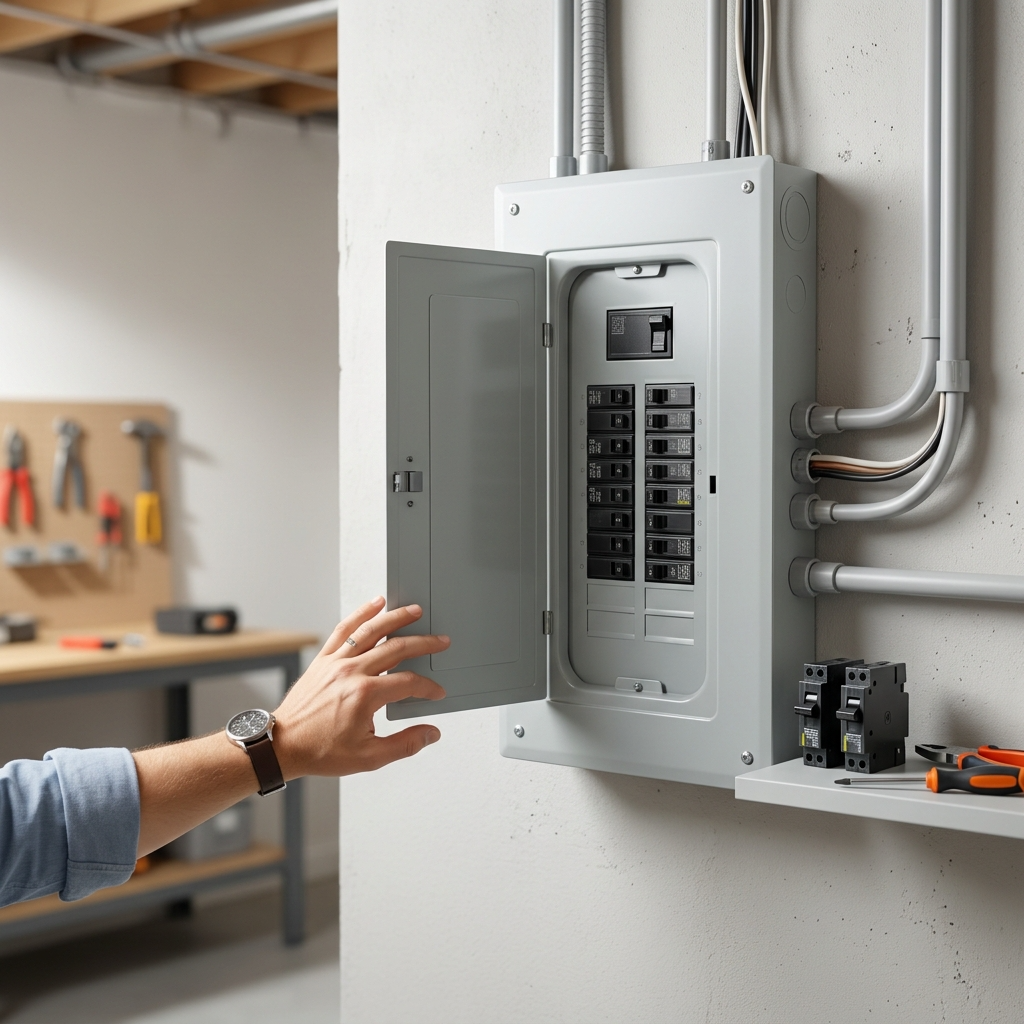
Electrical panel work is not a DIY project. Licensed electricians have the training, tools, and legal authorization to perform this work safely and to code. Professional installation includes proper grounding, correct wire sizing, adequate clearances, permit acquisition, and final inspections. Working with insured professionals protects you from liability and ensures warranty coverage.
Electrical codes exist to protect lives and property. Licensed electricians stay current with code changes and understand requirements for safe installations. They know proper wire sizing for different loads, correct breaker types for various applications, and required safety clearances around panels. This expertise prevents dangerous mistakes that DIY attempts often create.
Insurance and liability considerations make professional installation essential. If you attempt panel work yourself and something goes wrong, your homeowners insurance likely will not cover resulting damage. If a fire occurs due to improper installation, you face potential liability. Licensed, insured professionals carry coverage that protects you from these risks.
Professional installations also include warranties on workmanship and materials. If problems develop after installation, reputable electricians return to address issues at no additional cost. This guarantee provides peace of mind that DIY work cannot match. With over 15 years of experience serving Calgary properties, established electrical service providers stand behind their work and maintain reputations built on quality and customer satisfaction.
Frequently Asked Questions
How often should electrical panels be replaced?
Electrical panels typically last 25 to 40 years under normal conditions. However, replacement timing depends more on capacity needs and warning signs than age alone. If your panel shows signs of damage, cannot handle your electrical load, or lacks modern safety features, replacement becomes necessary regardless of age. Homes built before 1990 with original panels should have professional assessments to determine if upgrades are needed.
What is the difference between 100-amp and 200-amp service?
The amperage rating indicates how much total electrical current your panel can safely deliver. A 100-amp panel provides 100 amps of total capacity, which was adequate for homes built several decades ago. A 200-amp panel doubles that capacity, accommodating modern appliances, electronics, HVAC systems, and potential additions like EV chargers. Most homes today need 200-amp service to operate safely and efficiently.
Can I upgrade my electrical panel myself?
No, electrical panel upgrades require licensed electricians. This work involves coordination with utility companies, proper permits, code compliance, and working with high-voltage electricity that can cause electrocution or fires if handled incorrectly. In Calgary, only licensed electricians can legally perform panel upgrades. Attempting DIY panel work violates electrical codes, voids insurance coverage, and creates serious safety hazards.
How long does an electrical panel upgrade take?
A typical residential panel upgrade takes 8 to 12 hours of work time. The actual timeline depends on factors like the complexity of your existing wiring, accessibility of the panel location, and whether service line upgrades are needed. Your home will experience a temporary power outage during installation, usually lasting several hours. Licensed electricians work efficiently to minimize disruption while ensuring safe, code-compliant installation.
Will I need to upgrade my electrical panel before selling my home?
While not always legally required, panel upgrades often become necessary for home sales. Home inspectors typically identify outdated or inadequate panels, and buyers frequently request upgrades as conditions of sale. Proactively upgrading your panel before listing your home can increase property value and prevent deal complications. Some buyers cannot secure financing for homes with known electrical deficiencies.
Does homeowners insurance cover electrical panel upgrades?
Standard homeowners insurance typically does not cover panel upgrades unless damage results from a covered event like a lightning strike or fire. Upgrades needed due to age, wear, or inadequate capacity are considered maintenance and fall to the homeowner. However, some insurance companies offer discounts for upgraded electrical systems, and addressing panel deficiencies may prevent coverage denials for future electrical claims.
What permits are required for panel upgrades in Calgary?
Electrical panel upgrades in Calgary require electrical permits issued by the city. Licensed electricians typically handle permit applications as part of their service. The permit process includes plan review, installation inspection, and final approval verifying code compliance. These permits ensure your upgrade meets safety standards and creates a documented record that protects your property value and insurance coverage. Never proceed with panel work without proper permits.